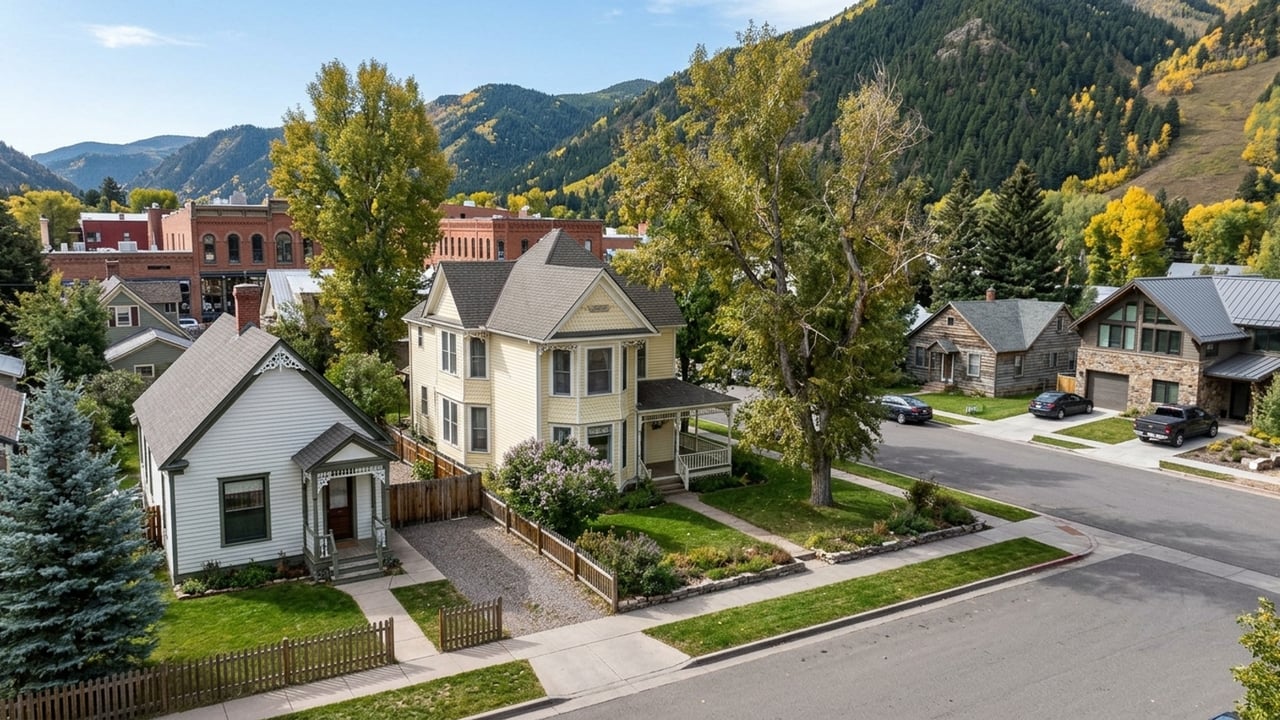
Aspen's transformation from a remote mining outpost to an international destination left distinct physical marks on the town. Every boom, bust, and modern policy change created a different type of property, each with its own pricing and its own rules. Buyers looking at the market today are choosing between these historical layers.
The age of a building here determines more than its architectural style. It dictates what you can do with the property and what you'll pay to own it.
Key takeaway
Aspen began as a silver-mining camp in 1879, nearly emptied after the 1893 silver crash, and was rebuilt as a ski town after World War II, and that sequence still sorts what you can buy here. If you want a piece of the Victorian town, look at designated historic homes in the original townsite and accept design review on exterior changes. If you want a lower entry price, look at the condos the ski era and later housing programs created. Either way, homes across Aspen sold at a median 91.7% of list price in the 90 days ending September 30, 2026, which leaves room to negotiate.
Who this guide is for
You want to understand how Aspen became Aspen while deciding whether a historic Victorian, a ski-era condo, or a newer home in town fits what you want to own.
How Aspen's history shaped its housing market
Aspen's story has three layers: the 1880s silver town, the post-1946 ski boom, and the growth caps and worker-housing programs that followed. Each era left a different kind of housing, and those layers still show in today's prices. They split the market into single-family homes at a median sale price of $10,180,941 ($3,503 per square foot, based on just 17 sales) and condos at a $399,959 median ($251 per square foot, based on 40 sales) in the 90 days ending September 30, 2026.
That's roughly 14 times apart per square foot between the two categories. Which layer a property comes from tells you more about its price and its rules than any general sense of the town's reputation does. The condo figure likely mixes different unit types, such as deed-restricted or fractional properties, so check a unit's status before assuming it represents the open market. You can review the types of homes in Aspen to see how these units differ.
Aspen history timeline
The properties you tour today trace directly back to four distinct phases of the valley's past. From the original Indigenous inhabitants through the mining boom and the modern resort era, the town's footprint evolved to match its changing economy.
These four eras explain why certain neighborhoods feature 19th-century architecture while others are lined with mid-century lodges. It also explains the specific restrictions attached to different properties.
The Ute homeland and the silver boom
The Ute people lived in the Roaring Fork Valley long before white settlement, hunting throughout the area and often establishing summer campsites near springs. By 1868, their territory had been confined to the western side of the Continental Divide and continued to shrink as prospectors discovered silver and gold. Aspen began in 1879 as a mining camp originally named Ute City, was renamed Aspen in 1880, and formally incorporated on April 1, 1881.
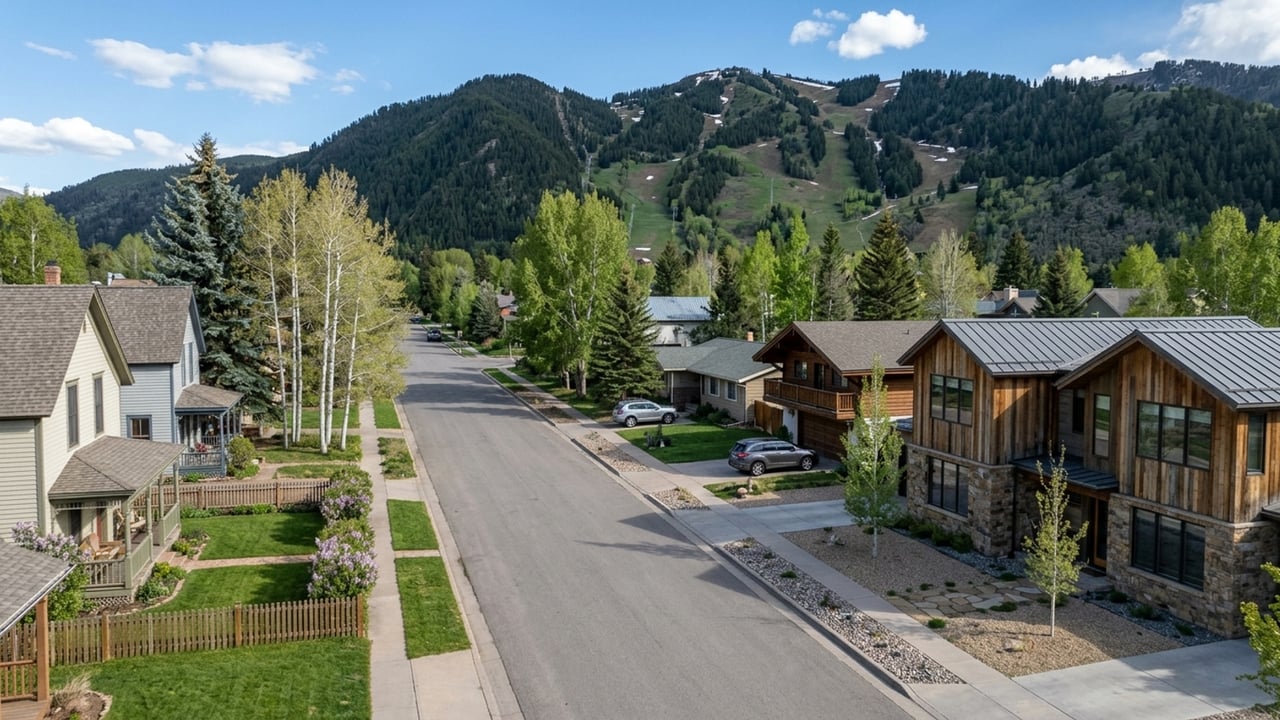
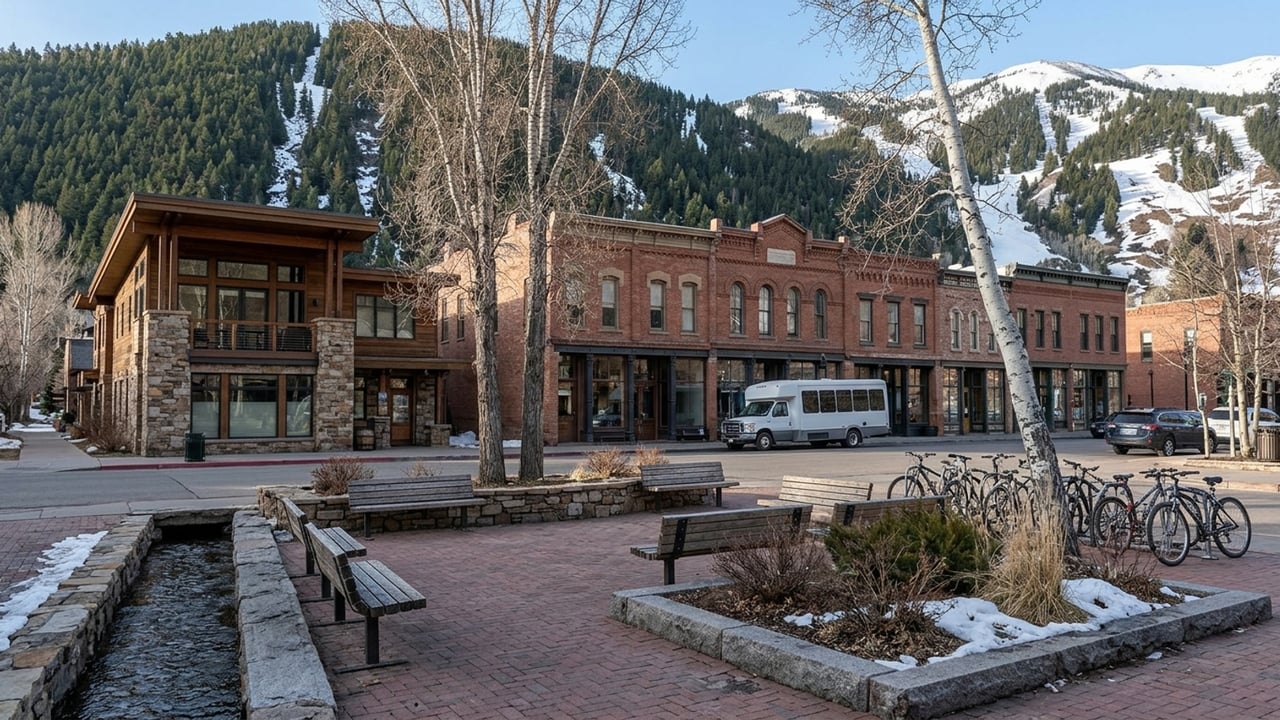
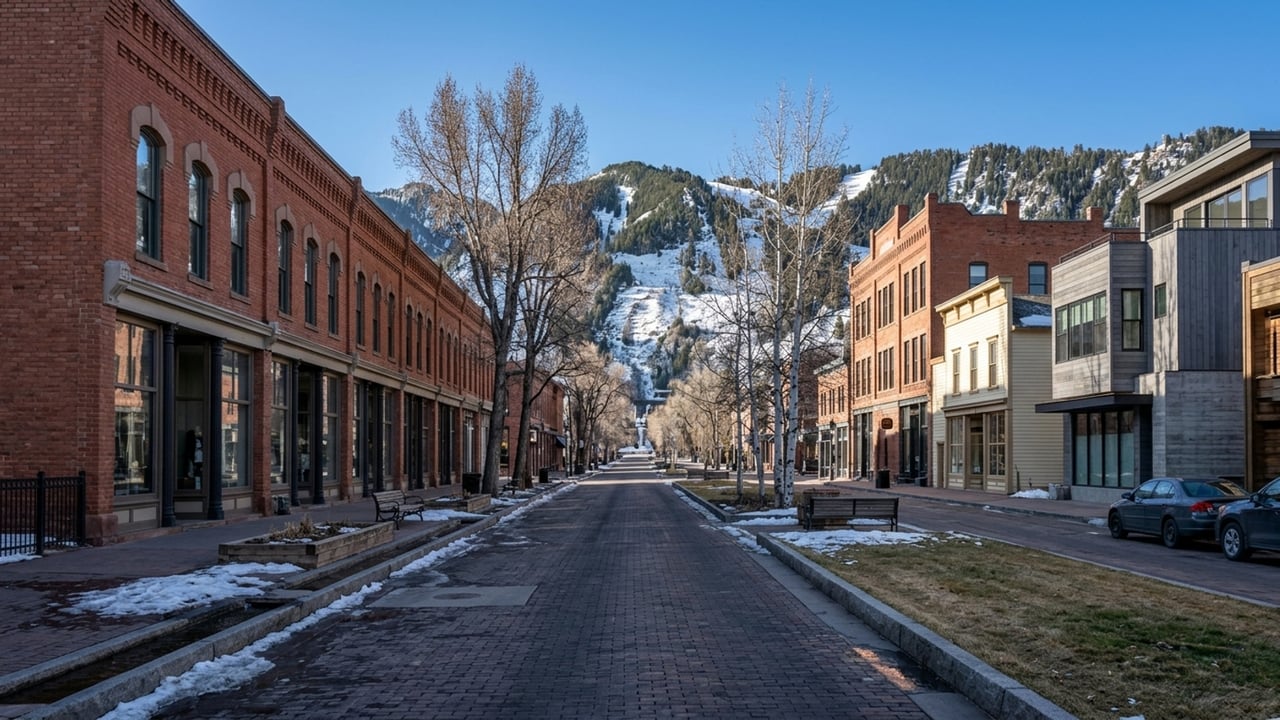
The resulting silver boom built the town's foundational architecture. Jerome B. Wheeler financed and built the Wheeler Opera House, which opened in April 1889 wired with some of the region's first electric lights. He also built the Hotel Jerome, which opened on Thanksgiving eve 1889 with steam heat, indoor plumbing, and the town's first elevator. Many surviving Victorian homes in the original townsite date from this decade.
The downside for buyers is that silver-era homes in the historic townsite often sit on small original lots and, if designated, require city review for exterior changes or demolition. Confirm a property's status with the City of Aspen before planning a remodel, and review the best neighborhoods in Aspen to see where these homes sit.
The quiet years after the 1893 silver crash
In 1893, Aspen reached a peak population of roughly 10,000 to 14,000 when Congress repealed the Sherman Silver Purchase Act, demonetizing silver. The resulting Silver Panic halted the area's mining industry and triggered a long economic decline. Aspen's population dropped sharply during what became known as the "Quiet Years," falling to a county-wide population of just 1,770 by 1930. The town shifted to ranching, a story preserved at sites like the Holden/Marolt mining and ranching museum.
Even as the town emptied, mining occasionally made headlines. The largest silver nugget ever mined in the United States came from Aspen's Smuggler Mine in 1894, weighing 1,853 pounds and assaying at 96 percent pure silver, though it surfaced just after the crash had already driven down prices. Many boom-era buildings were lost or moved during these decades, while others survived simply because nobody could afford to replace them.
What that history means for buyers: decades of decline mean an old-looking Aspen house may be rebuilt, moved, or a reproduction. Ask for the property's designation record and building history rather than relying on the listing description.
Skiing, the 10th Mountain Division, and the Aspen Idea
The modern resort era began taking shape with early skiing at the Highland Bavarian Lodge in the 1930s and accelerated when veterans of the 10th Mountain Division returned after World War II. Chicago industrialist Walter Paepcke and his wife Elizabeth organized the Goethe Bicentennial Convocation and Music Festival in the summer of 1949, marking the 200th anniversary of Johann Wolfgang von Goethe's birth. This event led directly to the founding of the Aspen Institute later that year.
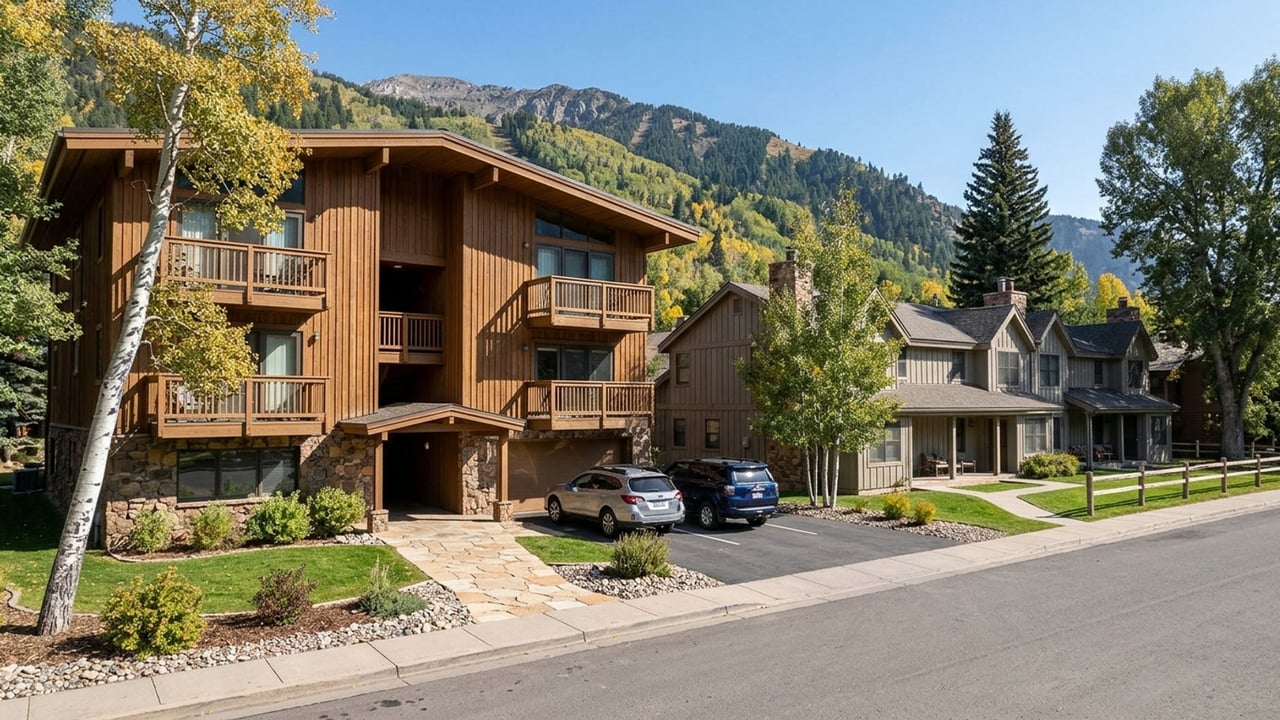
The 1950 FIS Alpine World Ski Championships put the town on the international map, marking the first time the championships were held outside of Europe. Expansion followed rapidly. Aspen Highlands was founded in 1958 by Whip Jones, and the Snowmass ski area opened in December 1967 with five chairlifts and 50 miles of trails. Lodges and condo buildings rose in the 1960s and 1970s to house the influx of visitors, creating much of today's condo stock.
The catch is that many ski-era condo buildings are now 50-plus years old. A low price per square foot can come with major repairs. Ask the HOA for current dues, the latest reserve study, and any planned special assessments before buying in Snowmass Village or Aspen proper.
Growth limits and the modern town
Aspen responded to its rapid late-century expansion by capping new development. The city adopted a Growth Management Quota System in 1977 to set annual limits on new homes, lodging, and commercial space. In 2024-2025, the city amended the code to comply with a state law barring local governments from enforcing annual residential building permit caps, effectively ending the residential allotment feature of the system. To house the local workforce, the city and county created an affordable housing program in 1974, establishing the consolidated Aspen Pitkin County Housing Authority (APCHA) in 1982.
These policies keep free-market supply thin. The APCHA program maintains a separate tier of deed-restricted homes that trade under their own rules, which sometimes show up in broader condo sales figures. You can check the current Aspen population to see how the full-time resident count compares with the boom era.
Deed-restricted units come with strict income, local-employment, occupancy, and resale-price rules set by the housing authority. Ask whether any listing or comparable sale is deed-restricted before treating its price as a market benchmark.
Buying a historic home in Aspen
Purchasing a Victorian property ties you to the city's preservation rules. If a home is designated as a historic landmark, the Historic Preservation Commission reviews exterior changes, additions, and demolition requests. Ask the City of Aspen's historic preservation staff whether a property is designated or on the historic inventory, and what specific review process applies to your remodeling plans.
The mining era also left a unique mark on local property titles. Pitkin County assessment procedures explicitly address non-producing patented mining claims and severed mineral interests as distinct property classes. Patented mining claims are common on the backside of Aspen Mountain, and mineral rights on these parcels are often severed from surface ownership.
That matters because the mineral estate and surface estate can be held by different owners in the chain of title, with the mineral owner retaining rights to access the surface. Ask the title company whether a parcel sits on a patented mining claim or has severed mineral rights, and review the buyer closing costs in Aspen to understand title and transfer expenses.
Aspen housing market today
The overall median sale price for all homes rose 35.9% year over year, while both single-family and condo medians fell during the same period. This divergence reflects a shift in which specific homes sold rather than broad market appreciation. Don't read the headline increase as a uniformly hot market.
Condos took a median 128 days to sell and sat at 7.5 months of supply, offering the most room to negotiate in town. Single-family homes moved faster but still gave buyers more room to negotiate compared to peak years. Read what the experts are saying about the spring housing market in Aspen for current trends.
Single-family prices sit well above conforming loan limits. The 17 single-family sales in the 90 days ending September 30, 2026, were financed with cash or jumbo loans. You can check current mortgage rates in Aspen to see where jumbo financing stands.
How to narrow your Aspen home search
Choosing the right property depends on which era of Aspen fits your budget and your plans for the place. These questions help focus the search:
- Do you want to own part of the 1880s town, and can you live with the city reviewing changes to a designated building? If yes, read "The Ute homeland and the silver boom" and "Buying a historic home in Aspen."
- Is your budget closer to the condo median or the single-family median? Compare them in "How Aspen's history shaped its housing market" and the at-a-glance list, then read "Skiing, the 10th Mountain Division, and the Aspen Idea" for what ski-era condo buildings come with.
- Would a deed-restricted unit with income, work, and resale rules suit you, or do you need a free-market property? Read "Growth limits and the modern town."
- How much negotiating room do you want? Read "Aspen housing market today" for where listings sit longest.
If you want a home with 1880s character and can accept city review of exterior changes, start with designated Victorian homes in Aspen's original townsite. If you want the lowest entry price in Aspen, focus on condos, especially ski-era buildings. If you want the most room to negotiate, look for condo listings that have been on the market a while.
Review the pros and cons of living in Aspen to see what daily life costs across these different property types. Jordie Karlinski at Compass can help check a property's historic designation, deed restriction status, or HOA history before you make an offer.
Where to learn more about Aspen history
You can trace the town's timeline in person at sites managed by the Aspen Historical Society. Their properties include the Wheeler-Stallard Museum, the Holden/Marolt Mining and Ranching Museum, and the nearby Independence and Ashcroft ghost towns.
For a look at the silver boom's surviving commercial architecture, visit the Wheeler Opera House and the Hotel Jerome, both of which operate as working landmarks today. Read about where Aspen is to plan your route to these sites.
At a glance
- All homes: median sale price $3,398,382, up 35.9% year over year (65 sales, 90 days ending Sept 30, 2026). Both single-family and condo medians fell, so this rise reflects which homes sold.
- All homes: median 123 days on market; 91.7% sale-to-list; 1.6% sold above list (90 days ending Sept 30, 2026)
- All homes: 149 for sale, 7 months of supply, median $2,426 per sq ft (90 days ending Sept 30, 2026)
- Single-family: median sale price $10,180,941, down 21.7% year over year; median $3,503 per sq ft. Based on only 17 sales in the 90 days ending Sept 30, 2026, so treat as a rough guide.
- Single-family: median 85 days on market; 91.6% sale-to-list; 0% sold above list; 33 for sale; 5.9 months of supply (based on 17 sales, 90 days ending Sept 30, 2026)
- Condo: median sale price $399,959, down 76.5% year over year; median $251 per sq ft (40 sales, 90 days ending Sept 30, 2026). A swing this large likely reflects the mix of units sold, so ask what kind of unit any comparable was.
- Condo: median 128 days on market; 91.6% sale-to-list; 2.6% sold above list; 97 for sale; 7.5 months of supply (40 sales, 90 days ending Sept 30, 2026)
Aspen, CO history FAQs
When did Aspen become a ski resort?
Early skiing started at the Highland Bavarian Lodge in 1936. The modern resort era took shape with the founding of the Aspen Skiing Corporation in 1946. Lift-1 opened on Aspen Mountain in January 1947, cementing the town's status as a ski destination.
How old is Aspen?
As of 2026, Aspen is 147 years old, dating back to its start as a prospector settlement in 1879. The Town of Aspen formally incorporated on April 1, 1881.
Is Aspen, CO a town or city?
Aspen is legally the City of Aspen, operating under a home rule charter as its municipal government structure. It also serves as the county seat for Pitkin County, which was named for Colorado Governor Frederick Walker Pitkin.
How many full-time residents live in Aspen?
The city had 7,004 full-time residents as of the April 1, 2020 Census. This is well below the silver-boom peak in 1893, when the population reached roughly 10,000 to 14,000 before the crash. Check the Aspen population page for population details by year.
What was Aspen originally called?
The mining camp was originally named Ute City in 1879, recognizing the Ute people who lived and hunted in the Roaring Fork Valley long before white settlement. It was renamed Aspen in 1880.
Is Aspen, Colorado named after the tree?
Yes, the settlement was renamed Aspen in 1880 in recognition of the area's abundant aspen groves. The town formally incorporated under that name the following year.
What is the history of Aspen Highlands?
Aspen Highlands was founded in 1958 by Colorado Ski Hall of Famer Whip Jones. The Aspen Skiing Company later assumed ownership and operation of the mountain in 1993, bringing it under the same umbrella as Aspen Mountain and Snowmass.
What county is Aspen, CO in?
Aspen is located in Pitkin County and serves as the county seat. The county was created in 1881 and named for Frederick Walker Pitkin, who served as Colorado's second governor. Read more about where Aspen is to see its location within the state.
Sources
- Redfin: Data Center
- Wikipedia: Aspen, Colorado
- Aspen Historical Society: Local History Timeline
- Wheeler Opera House: Our Story
- Aspen Historical Society: Aspen in Objects Silver Nugget
- Aspen Institute: Our History and Heritage
- Wikipedia: FIS Alpine World Ski Championships 1950
- Wikipedia: Aspen Skiing Company
- Colorado General Assembly: 2023a_sl_448.pdf
- Utah State University: APCHA Study
- Colorado Department of Education: Pitkin County Property Assessment Study
- US Census Bureau: QuickFacts Aspen city, Colorado
- Aspen Daily News: Article