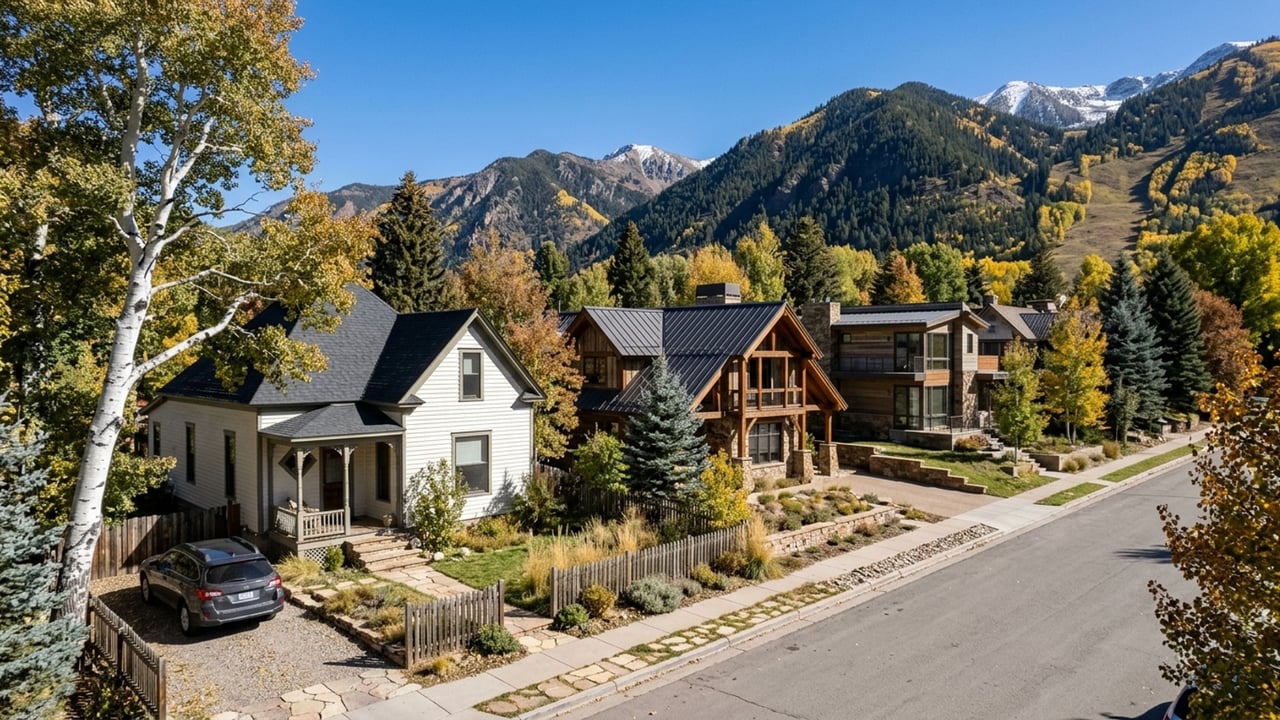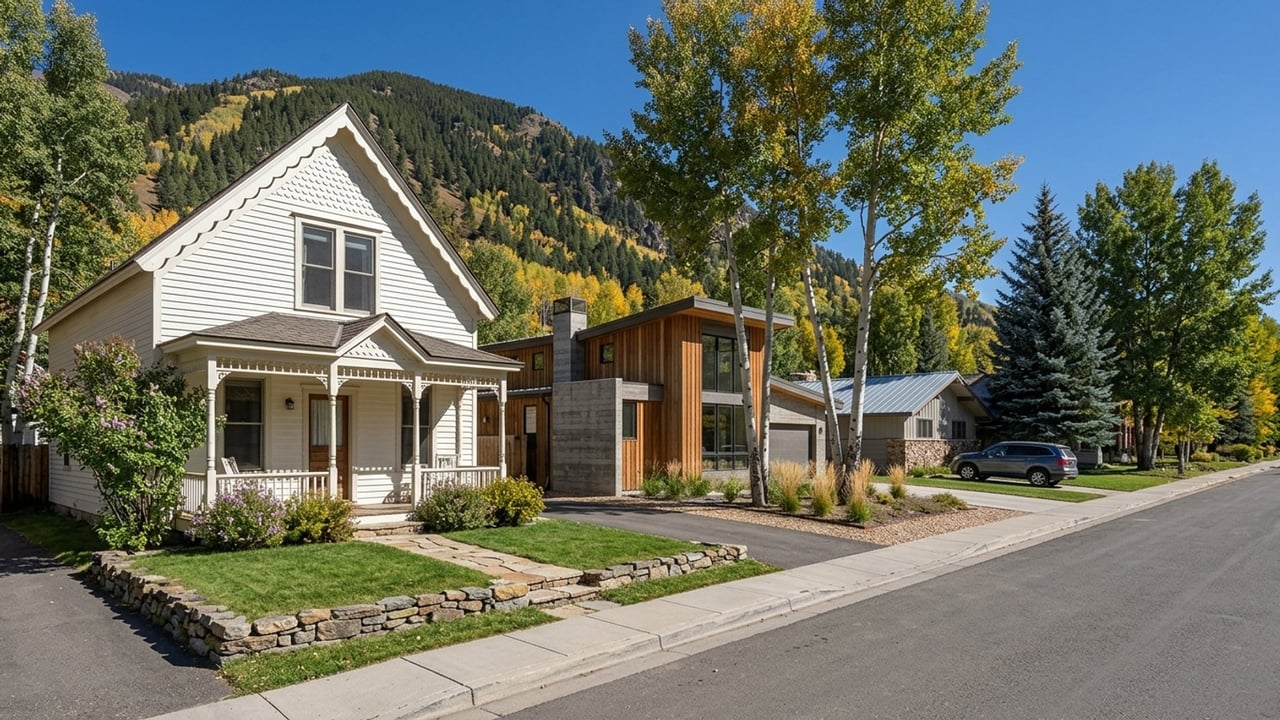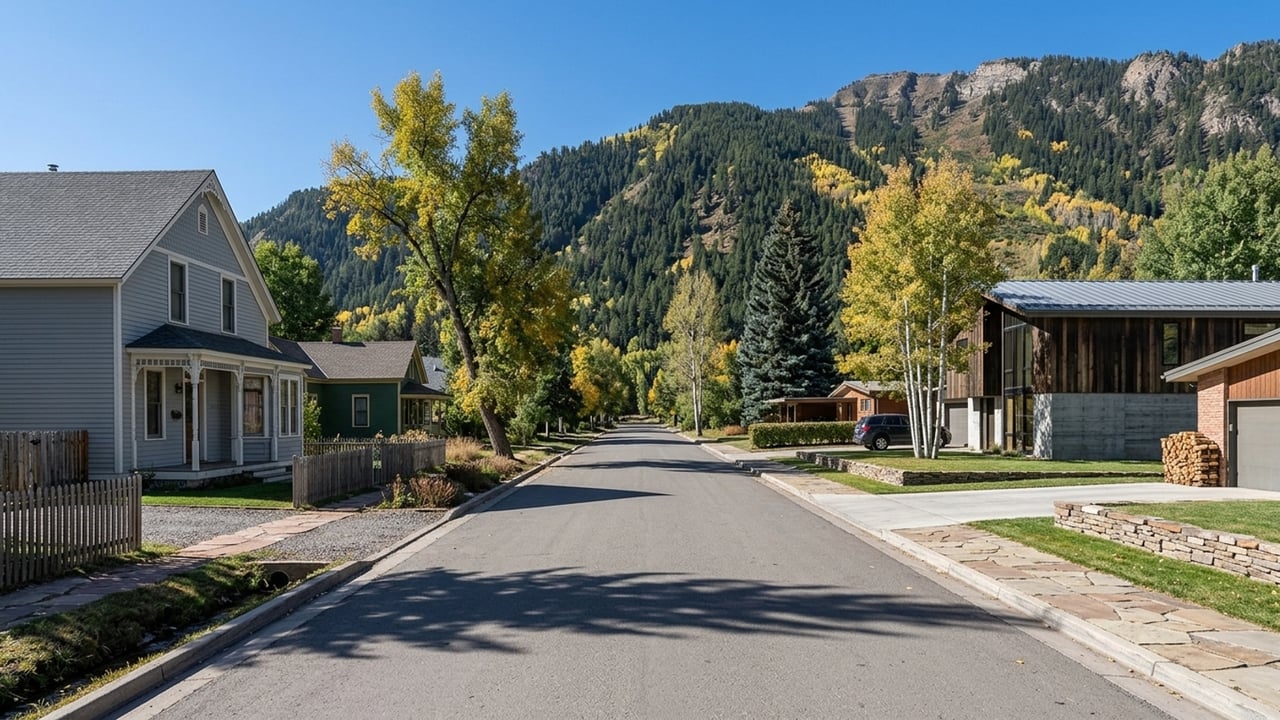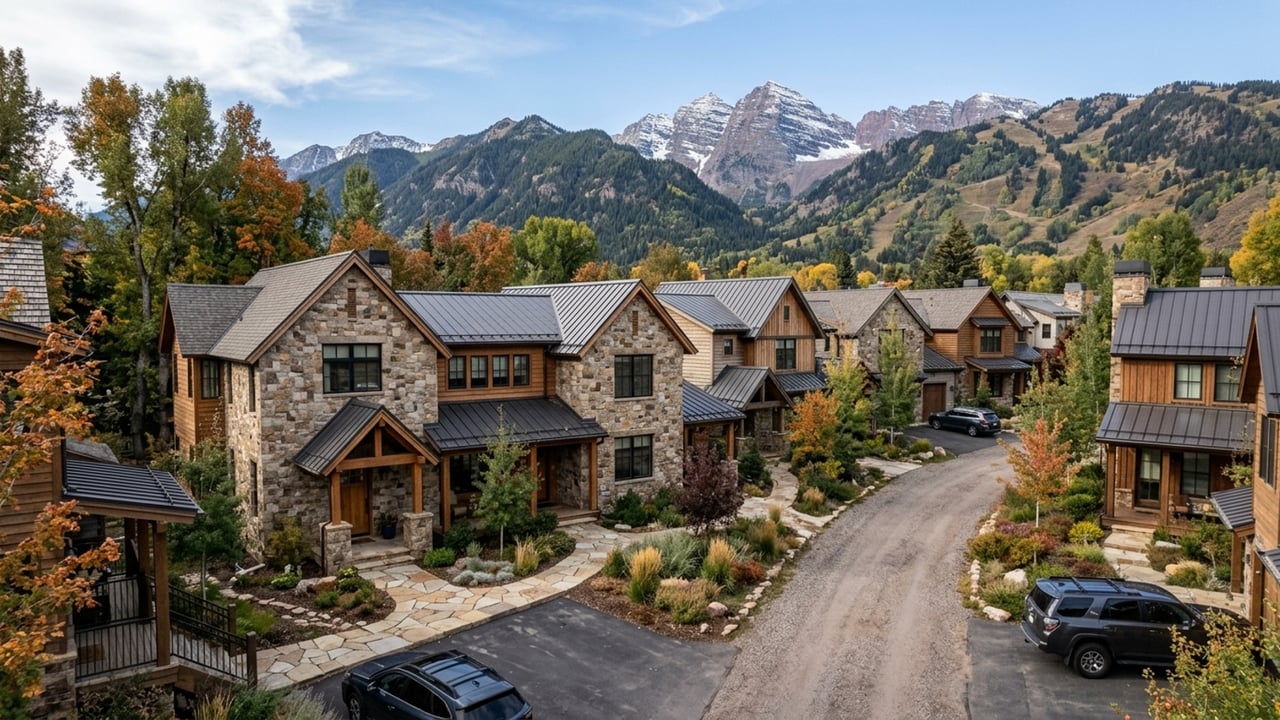
As of mid-2026, the overall median sale price for a residential property in Aspen, CO sits at approximately $2.1 million. There are roughly 167 available properties at any given time, listings are averaging 134 days on market before closing, and with about 11 months of supply, you're not going to get rushed into a decision you're not ready to make.
What often surprises those buying a home in Aspen, CO is how much of this market is attached housing. Large detached estates get all the press, but condos, townhouses, and duplexes make up a massive portion of available inventory. They're also your most realistic entry point into Aspen - though they come with their own financial and structural considerations worth understanding before you start touring.
Active Listings and Finding Your Property
Inventory counts depend on where you look, and the gap between platforms is worth knowing about upfront. Zillow shows around 61 active condo listings; Trulia puts it between 41 and 44. Homes.com lists 142 condos for sale across the immediate area. Cross-referencing these platforms is the only way to make sure you're seeing the full picture.
Once you start searching, filter by price, bedroom count, and square footage early. Fractional ownership shares tend to clutter results for whole-ownership condos, and they'll skew your sense of what's available to you.
Setting Up Search Alerts
Save your search criteria on multiple platforms so you get immediate notifications when something new hits. Transaction volume in specific segments of this market is low enough that new inventory can be genuinely sparse - and when a well-suited unit appears, getting a showing scheduled quickly matters.
This is especially true if you're targeting a specific building or a particular floor plan. Waiting a day or two to check your email isn't a strategy that works well here.
Understanding Aspen Prices and Market Trends
The overall median of roughly $2.1 million is a useful starting point, but condo-specific pricing is messier than a single number suggests. Monthly transaction reports from local brokerages show median condo prices swinging dramatically - the median hit $2.44 million in April 2026, then jumped to $3.85 million in May 2026. That kind of month-to-month movement isn't a market reversal; it's what happens when total transaction volume is low and a handful of high-end sales shift the median.
You'll also encounter numbers on the opposite end that look like typos. A Houzeo report noted a median figure of around $157,500 - that reflects timeshares and fractional interests, not full-ownership properties. It's a real number, just not the one you're shopping for.
Timing Your Purchase in Colorado
For broader context, Houzeo reports the average cost of a condo across Colorado is roughly $454,900, compared to $631,400 for single-family homes statewide. The statewide median home price has dipped slightly - 0.02% year-over-year. Those state-level figures won't tell you much about a specific deal in Pitkin County, but they're worth keeping in mind when you're trying to make sense of the low-volume pricing behavior you'll see locally.
Budgeting for Homeowner Association Fees
Monthly dues can genuinely reshape your budget here, and they deserve more attention than most buyers give them before they're already in love with a unit. Luxury condos in the downtown core typically carry HOA fees ranging from $1,500 to more than $5,000 per month.
Outside the ultra-luxury segment, fees are still substantial. Listings along Prospector Road and Boomerang Road show monthly dues running between $1,899 and $2,089. That's a meaningful line item to account for before you calculate what you can afford.
Always pull the full HOA documents on any property you're seriously considering. They'll tell you exactly what those monthly payments cover and flag any upcoming special assessments for building maintenance.
What These Monthly Dues Cover
High monthly fees typically pay for exterior maintenance, snow removal, and shared amenities. Many buildings also fold in utilities, trash collection, and common area insurance. That bundling can simplify your monthly expenses - but only if you understand what's included before you close.
Ask the association board directly about the current reserve fund balance. A well-funded reserve is what stands between you and a surprise out-of-pocket bill when the building needs a new roof or updated siding.
Exploring Neighborhoods and Specific Buildings
The downtown core holds the highest concentration of attached properties, with named communities like Hunter Creek Condos among the options in the immediate area.
One thing that trips up a lot of buyers searching online: you'll see developments like Copperleaf, Tuscany, or Jackson Farm appear in results that look like they're in Aspen. They're not. Those communities are in Aurora, CO - an entirely different neighborhood in the Denver metro area. Always verify the ZIP code to confirm a property sits in Pitkin County before you spend time on it.
Properties Near the Roaring Fork Valley
Expanding your search slightly beyond the downtown grid opens up more attached housing options closer to the wider Roaring Fork Valley. The pace is different out there - lower density, different architectural styles, a different relationship to the commercial core.
If you're considering anything in those outlying locations, drive the routes to the main commercial district at different times of day. Understanding the daily commute in practice is worth more than any map estimate.
Premium Amenities: Riverfront and Ski Access
Riverfront properties carry a premium for straightforward reasons - immediate water access and protected views. Condos on Aspen Mountain with ski-in/ski-out access eliminate winter commuting and parking entirely, which has real daily-life value that buyers who've dealt with a shuttle or a crowded lot understand immediately.
Expect higher baseline prices and potentially higher monthly maintenance dues in both categories. The convenience of stepping directly onto the snow doesn't come free.
Luxury and New Construction Options
The luxury segment spans historic renovations and brand-new construction. New builds typically come with modern energy-efficient systems, secure underground parking, and advanced smart-home technology. If you're considering new construction, verify completion timelines directly with the developer - supply chain variables and local building schedules can move the actual move-in date around considerably.
Other Attached Property Styles
Condominiums are the most visible part of this market, but they're not the whole picture. Townhouses offer something closer to a middle ground between a condo and a detached single-family home - multiple stories of living space, a private exterior entrance, and fewer shared walls than a typical condo, which tends to reduce noise transfer between units.
Duplexes and multi-family structures are also part of the inventory. For buyers who want more interior square footage without the full maintenance responsibility of a standalone house, they're worth a look.
Townhomes Versus Duplexes
Townhomes typically sit within a larger homeowners association that manages the exterior grounds. That structure simplifies maintenance but means you're living by community rules.
Duplexes usually operate with a simpler arrangement - a maintenance agreement between the two unit owners rather than a full HOA structure. Before you commit to a duplex, review the party-wall agreement carefully so you understand exactly how shared repairs get handled and who initiates them.
Assessing the Local Cost of Living
Property prices are only part of the financial picture in Aspen. BestPlaces assigns the area a Cost of Living score of 220.4, meaning total expenses run 120.4% above the national average. The Economic Research Institute reports that expenses here are 55% more expensive than the national average and 41% higher than the average Colorado city. Salary.com puts living costs at 34% above the national average. The sources don't all land on the same number, but they're all pointing in the same direction.
Property taxes add another layer. Colorado uses a 6.765% residential assessment rate. Ownwell data shows a median effective property tax rate locally of roughly 0.22%, with median tax bills ranging from $7,739 in the 81611 ZIP code to $10,500 in the 81612 ZIP code.
Matching Property Types to Your Goals
First-time buyers and downsizers often gravitate toward condos because the association handles exterior upkeep - predictable maintenance schedules, less time managing contractors. Vacation buyers favor attached properties for the same reason: the lock-and-leave setup is straightforward.
Whatever your situation, calculate your total monthly carrying costs - mortgage, taxes, and association dues together - before you settle on a property type. The sticker price on a condo can look manageable until you add $2,000 a month in dues on top of it.
Frequently Asked Questions
What is the price difference between a ski-in/ski-out condo and a standard townhome in Aspen, CO?
It depends on the specific unit and location. Overall condo prices fluctuate - from $2.44 million to $3.85 million in recent months alone - and the exact premium for ski-in/ski-out access varies widely compared to a standard townhome.
Should I buy a fractional ownership property or a whole-ownership condo in downtown Aspen?
It depends on your budget and how often you plan to use the property. Fractional interests come in at a much lower entry point - which is why some platforms report median condo prices around $157,500. Whole-ownership condos are a different category entirely, with median prices that have recently exceeded $2.44 million.