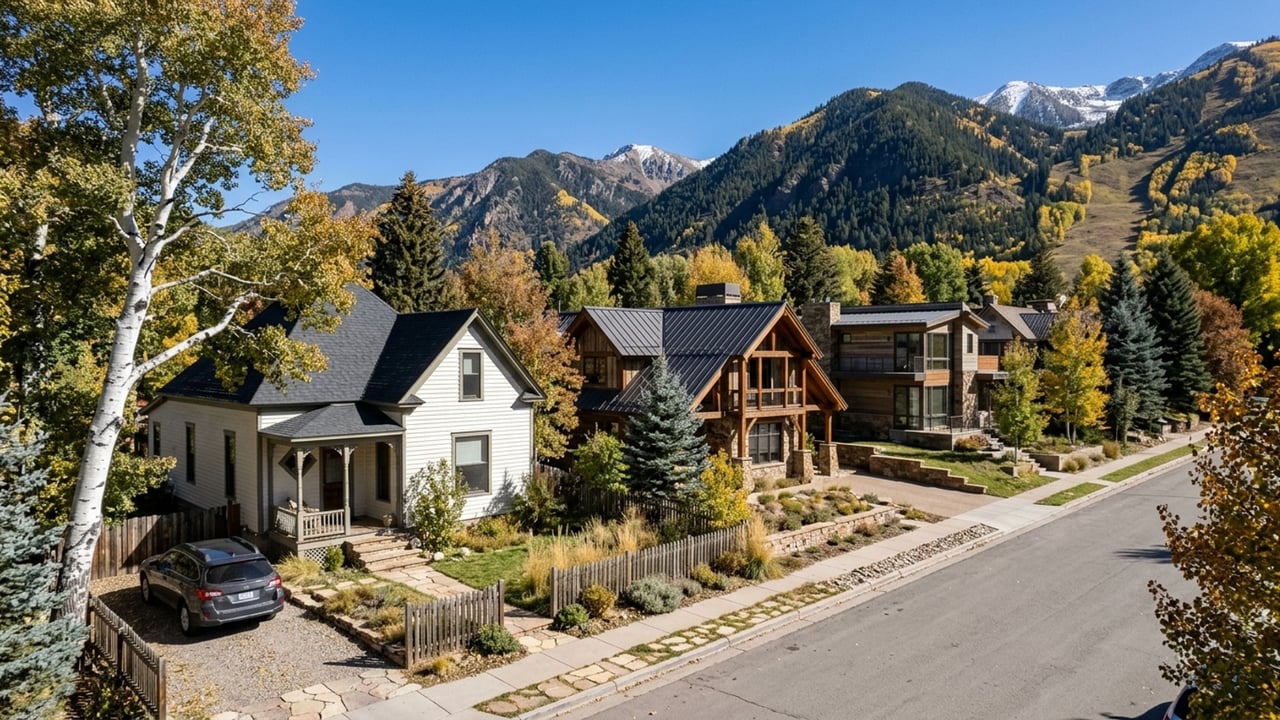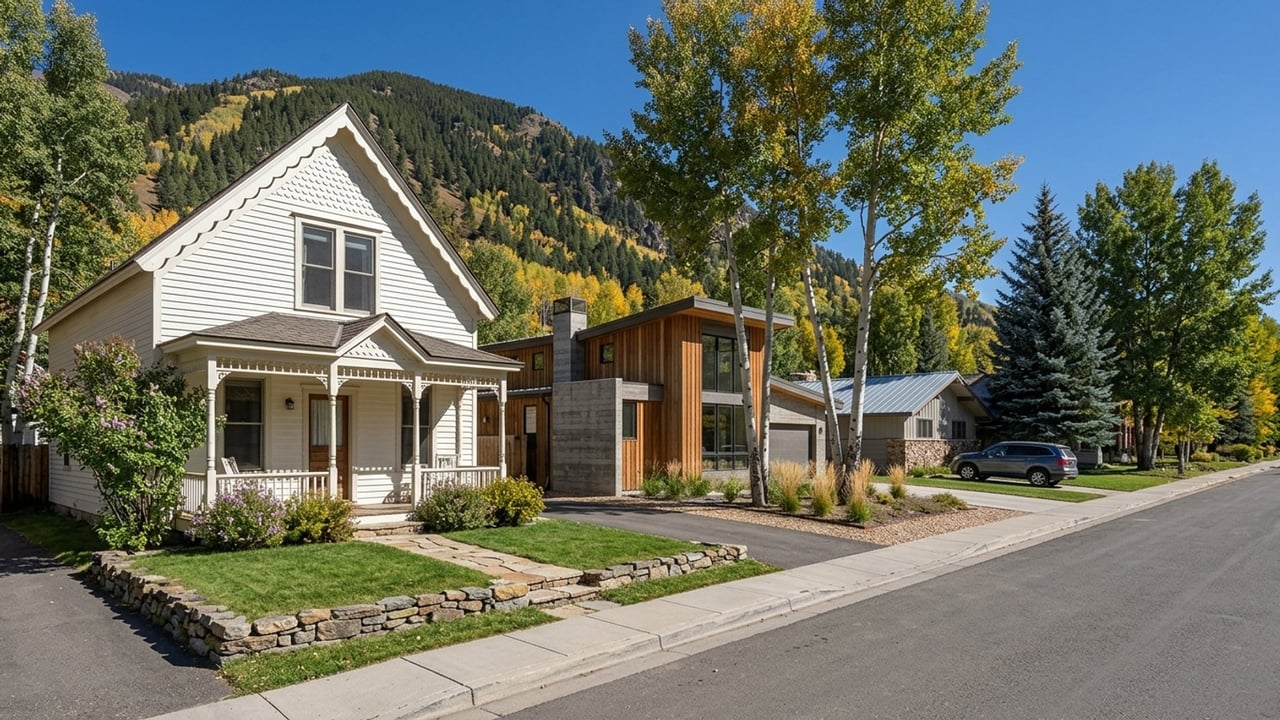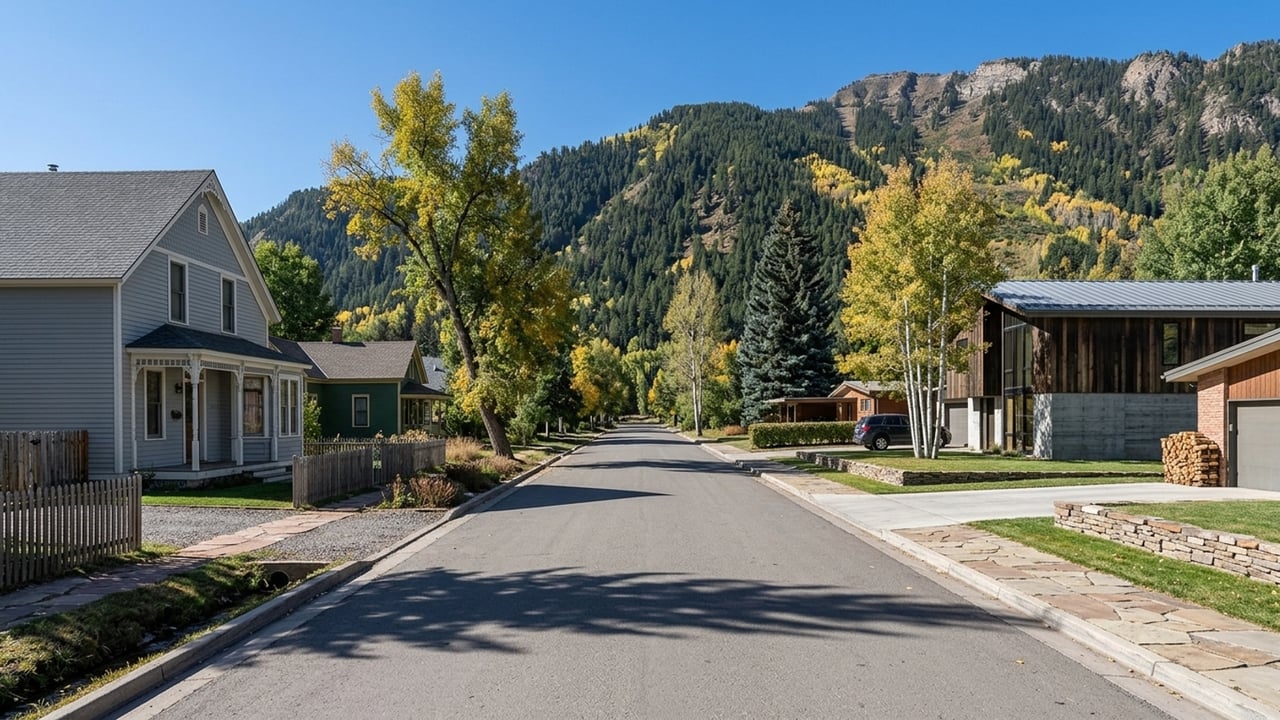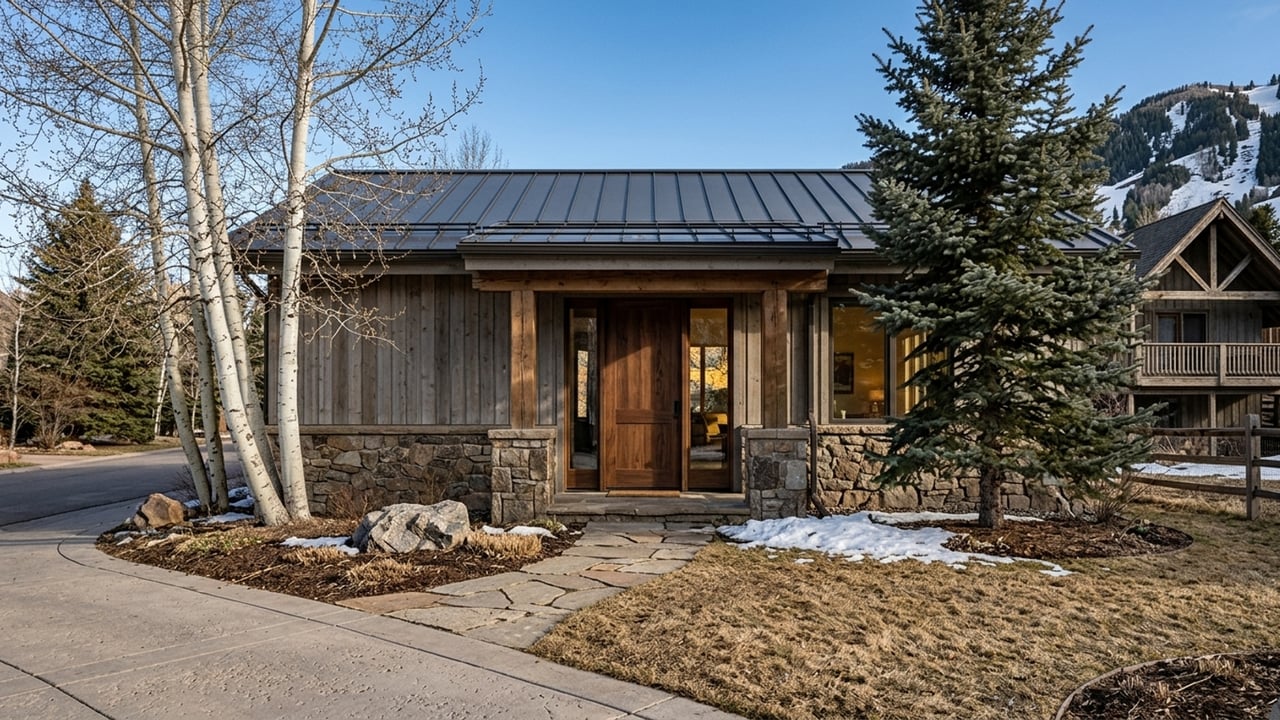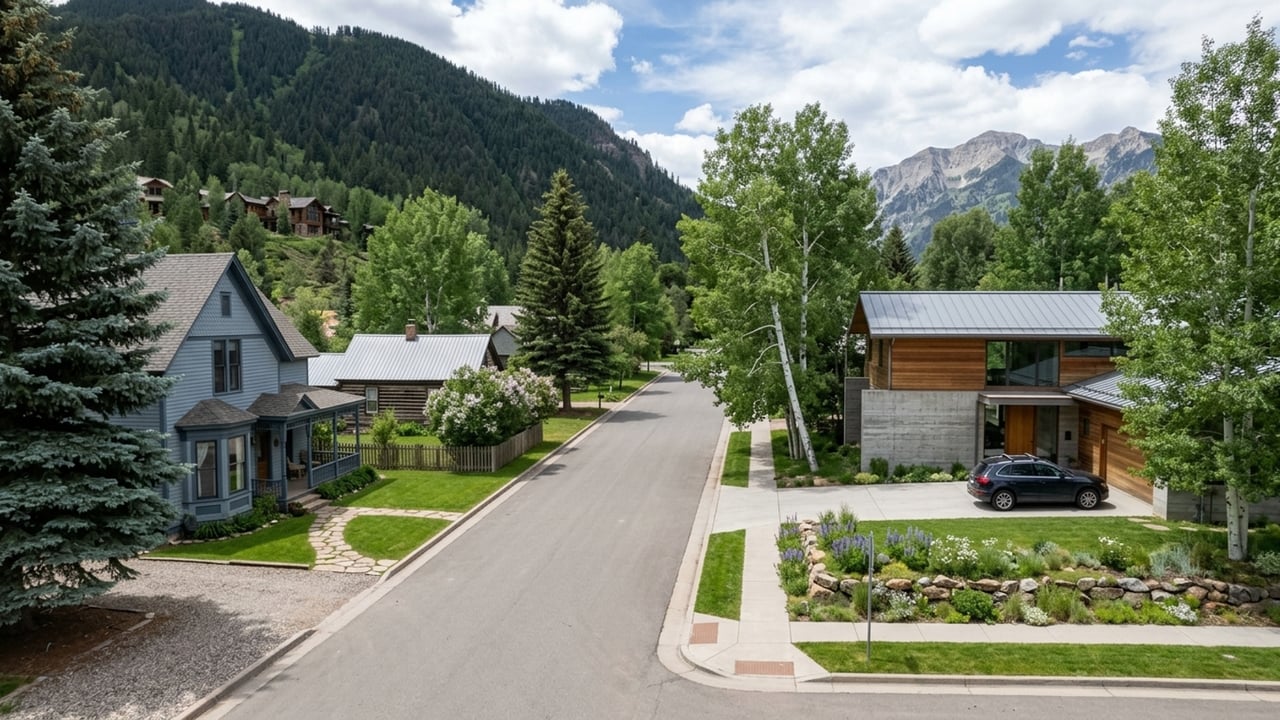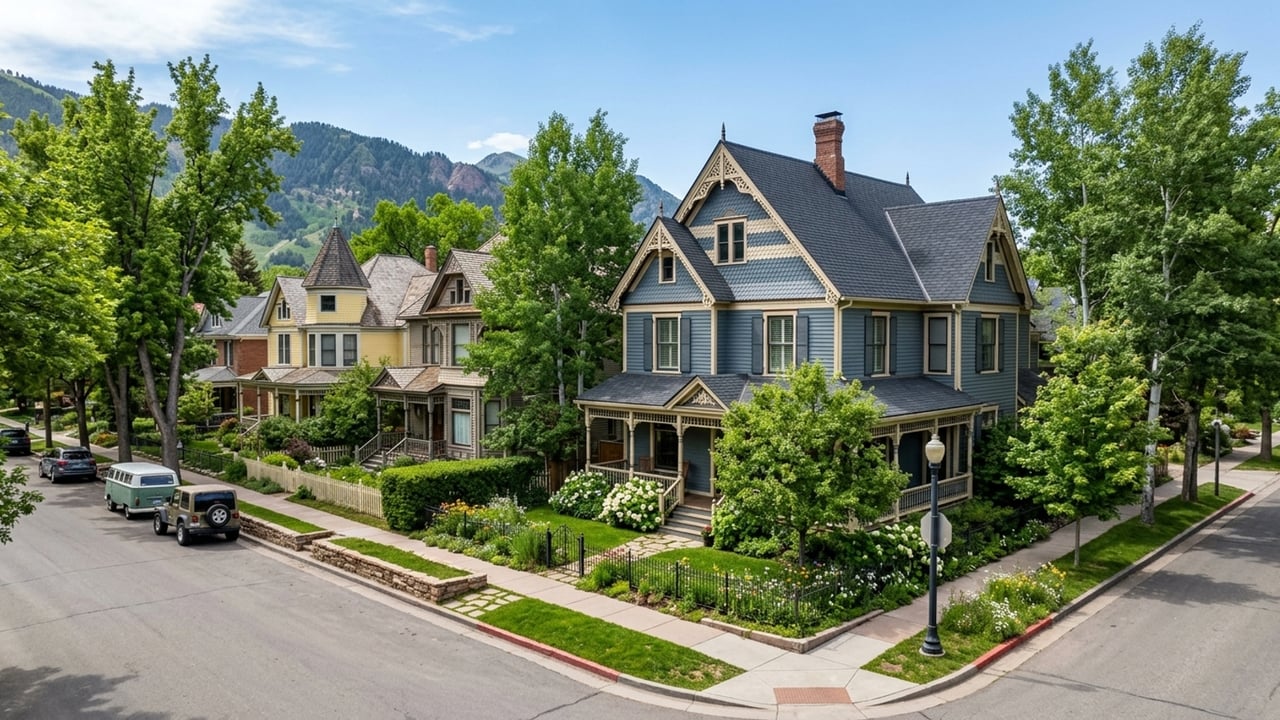
Aspen sits in Pitkin County within the Roaring Fork Valley - historic architecture, ski access, and luxury real estate all folded into one compact mountain town. Buying a home in Aspen means dealing with a market that swings hard depending on property type and location.
Mid-2026 data puts the overall median sale price at roughly $2.1 million across all housing types, with homes averaging about 134 days on the market. That number tells only part of the story, though - single-family detached homes hit a median of $13.2 million last year. The spread between those two figures tells you almost everything you need to know about how this market works.
How Aspen Neighborhoods Are Organized
The city breaks into several distinct areas, each with its own housing stock and its own relationship to landmarks like Aspen Mountain and the Roaring Fork River. The primary residential zones are the Downtown Commercial Core, the historic West End, Red Mountain, West Aspen, Cemetery Lane, East Aspen, Mountain Valley, and the neighborhoods that border Aspen Highlands and Snowmass Village.
That geography matters because a condo near the ski lifts is a fundamentally different transaction - financially and practically - than a large estate on the north side of town.
Aspen Within the Roaring Fork Valley
Aspen anchors the upper end of the Roaring Fork Valley in Pitkin County. Year-round population runs around 6,756 residents, with a median household income of roughly $74,033 based on recent census data.
A lot of buyers organize their search around Highway 82 access. How quickly you can move through the valley during peak winter and summer seasons depends almost entirely on where you sit relative to that road.
Local Real Estate Options
Your neighborhood decision should come down to concrete factors: dominant home types, lot sizes, and how far you're willing to be from downtown. The market runs the full range - ski-in/ski-out condos on one end, historic properties with strict preservation compliance on the other.
Current inventory stands at 167 active listings. Options exist, but certain property types are genuinely scarce, and a local agent can tell you quickly which subdivisions match what you're looking for.
Aspen Neighborhood Map and Geography
Downtown is compact, with residential areas fanning out from the Commercial Core - climbing the mountainsides or running along the river, depending on which direction you go. The West End sits immediately adjacent to the Core.
Topography does most of the heavy lifting here. Homes on the northern slopes look back across the valley at the ski area. Properties to the west and east stay closer to the valley floor and the Roaring Fork River. That orientation shapes everything from views to sun exposure to price.
Interactive Neighborhood Boundaries
Property lines often follow natural features - the river, steep elevation changes. Official zoning maps define exactly where high-density condo development ends and larger single-family lots begin.
Those maps also show subdivision boundaries and historic district lines. Check the official city map before you make an offer on anything.
North, South, and West Divisions
The northern side of town belongs to Red Mountain - large lots, elevated positions, valley views. The southern boundary pushes right up against Aspen Mountain, which is why properties within walking distance of the ski lifts carry a premium.
To the west, West Aspen and Cemetery Lane stretch along the highway and river corridors. East Aspen, including Mountain Valley, sits slightly removed from the downtown traffic - quieter, but still a short drive from the center.
Home Types and Prices Across Aspen
That overall median of $2.1 million blends multi-million dollar estates with smaller condos. On the sales side, sellers are getting about 93.4% of list price on average. Property type is what sets the entry point for each part of town.
Single-Family Detached Homes
Single-family homes sit at the top of this market. In 2025, the median sales price for a detached home in Aspen reached $13.2 million, with the average climbing to $17.3 million.
These properties dominate Red Mountain, East Aspen, and the West End. Lot sizes vary considerably - from compact historic parcels in town to multi-acre sites on the hillsides.
Condos and Townhomes
Attached housing brings the entry point down, though "down" is relative here. The median condo and townhouse price was $3.5 million last year. Most of these units are concentrated in the Downtown Core and near the base of Aspen Mountain.
Factor homeowner association dues into your monthly carrying costs. These units generally offer closer ski access and more commercial amenities than detached homes.
Historic Districts and Architecture
Aspen runs a formal Historic Preservation program and maintains an inventory of landmark sites. The Commercial Core Historic District was established by Ordinance #49 in 1974 and includes National Register-listed buildings like the Armory City Hall and the Hyman-Brand Building.
The West End holds numerous National Register-listed Victorian homes - the Newberry House and the Samuel I. Hallett House among them. Buy in these zones and you're signing up for municipal preservation guidelines on any renovation or exterior change. That's not a dealbreaker, but go in knowing it.
Profiles of Notable Aspen Communities
Each residential zone here has a distinct housing profile and price range. Some buyers need immediate ski access; others want larger lots or a specific architectural period. The data shows real differences between what each area delivers.
Red Mountain and East Aspen
Red Mountain is where the highest-priced properties concentrate, typically ranging from $10 million to over $70 million. Large lots, luxury estates, elevated positions above the valley floor.
East Aspen and Mountain Valley run a mix of established homes and newer construction. The setting is a bit more removed from the Commercial Core - still a short drive, but noticeably quieter.
The West End and Downtown Core
The West End carries premium pricing, driven by its Victorian architecture and walkable grid-street layout just outside downtown. Most properties here are single-family, many with historic designations attached.
The Downtown Core is dense - condos, townhomes, commercial space. Mid-2026 data puts the median sale price at about $3.1 million in this central zone, which suits buyers who want restaurants, retail, and the lifts within walking distance.
West Aspen and Cemetery Lane
West Aspen and Cemetery Lane offer a mix of single-family homes, duplexes, and townhomes, with price points that are more approachable for full-time residents than Red Mountain or the West End. Both areas give you convenient access to the local golf course, the Roaring Fork River, and Highway 82.
The housing stock here is a blend of established properties and newer builds - less uniformity than some of the other zones, which can work in a buyer's favor.
Local Data and the Housing Market
With homes averaging 134 days on the market and only 167 active listings, you have time to look carefully - but not unlimited choices. Setting realistic expectations about inventory is as important as understanding pricing.
Beyond price, you'll want to sort out municipal boundaries and public services before you get too far into a search. School zoning and law enforcement jurisdiction both hinge on exactly where a property sits.
School District Boundaries
Public education here falls under Aspen School District 1, which serves the entire city and parts of the surrounding Pitkin County area. Attendance zones are determined by a property's physical address, so verify the specific boundary lines using official district maps before you finalize anything.
Local Crime Data
For safety data, go to official municipal sources rather than third-party summaries. The Aspen Police Department covers addresses within city limits. For outlying subdivisions or unincorporated areas, the Pitkin County Sheriff's Office is the primary agency. The FBI Uniform Crime Reporting (UCR) program also publishes annual statistics for the region.
Frequently Asked Questions
What are the best neighborhoods in Aspen, CO for families with school-aged children?
All properties within city limits fall under Aspen School District 1. West Aspen and Cemetery Lane tend to offer more approachable price points for full-time residents looking for single-family homes. Confirm attendance zones using official district boundary maps based on the specific address you're considering.
Which Aspen neighborhoods offer the best true ski-in/ski-out access for homeowners?
Direct ski access is concentrated at the base of Aspen Mountain and in subdivisions bordering Aspen Highlands and Snowmass Village. The Downtown Core also puts you close to the lifts - median sale price there runs around $3.1 million for condos and townhomes.
Are there specific neighborhoods in Aspen where short-term vacation rentals are banned or restricted?
The city regulates short-term rentals through municipal ordinances and zoning laws, and restrictions vary between the Commercial Core and residential areas like the West End. Check the city's official zoning map and the rules of any individual homeowner association before you assume a property works as a rental.
How does buying a home in Aspen's historic West End compare to living directly in the Downtown Core?
The West End is primarily single-family Victorian homes, many on the National Register of Historic Places, with preservation guidelines that apply to renovations and exterior changes. The Downtown Core is higher-density condos and townhomes - median price around $3.1 million - with immediate access to commercial amenities.
Which Aspen, CO neighborhoods offer the best value for buyers looking outside the ultra-luxury market?
West Aspen and Cemetery Lane generally offer more approachable price points compared to the $10 million to $70 million range you'll find on Red Mountain. The overall median sale price across all property types in Aspen sits at roughly $2.1 million, though single-family homes average considerably higher.
What neighborhoods in Aspen get the most winter sunlight and the best mountain views?
Red Mountain sits on a south-facing slope, with elevated positions that maximize winter sun and direct sightlines to Aspen Mountain across the valley floor. East Aspen and Mountain Valley also feature hillside properties with expansive views of the surrounding peaks.