The U.S. Census Bureau estimates the year-round population within Aspen, CO zip codes at roughly 6,489 residents. For anyone looking to buy property here, that official headcount tells only part of the story.
Housing units in the area continually outpace the number of full-time residents. A large portion of local real estate consists of second homes and vacation properties, so the physical footprint of the town feels considerably larger than its permanent census numbers suggest. If you're entering this market, understanding how that dynamic shapes inventory, property values, and future development matters more than the headline figure.
Current Year-Round Population of Aspen
According to the most recent data available from the U.S. Census Bureau (July 2025), Aspen's population is estimated at 6,489 - down noticeably from the 2020 Census count of 7,004 full-time residents. Other data models come in a bit differently depending on methodology: the 2020-2024 American Community Survey 5-year estimate puts the permanent population slightly higher, at 6,756. Either way, by official headcount, Aspen is a small town.
That smallness has real consequences for real estate. With limited room to expand and a relatively modest pool of permanent residents, housing demand here is driven by outside buyers, not local population growth. The median sale price for an Aspen home currently sits around $1.73 million, with properties spending roughly 128 days on the market.
Historical Growth and Housing Trends
Between the 2010 and 2020 decennial censuses, Aspen's population grew about 5.2%, climbing from 6,658 to 7,004 residents. That upward trend has since reversed. The latest available estimates show a 7.1% decline between April 2020 and July 2025.
The number of physical houses, though, has moved in the opposite direction. The 2000 census recorded 4,354 housing units in town. By the 2020-2024 American Community Survey, that figure had grown to 6,152 total units - steady construction even as the permanent population slipped.
That gap between residents and housing stock is the clearest signal of what kind of market this is. Most of the homes added over the past two decades weren't built for full-time residents. Today, local inventory sits at around 153 available homes, representing roughly 8.5 months of supply for buyers.
New Construction and Local Development
Recent residential construction has been modest. Of the town's total housing units, only 76 homes have been built since 2020.
Past population bumps were often tied directly to deliberate workforce housing initiatives. Aspen gained 744 residents during the 2000s largely because of new affordable housing projects like Burlingame, and the annexation of areas with concentrated worker housing near the base of Aspen Highlands contributed to that decade's growth as well.
Density and Community Layout
Aspen covers about 3.9 square miles total, which works out to a population density of roughly 1,749 to 1,815 people per square mile, depending on which census estimate you use. That density isn't spread evenly across the valley.
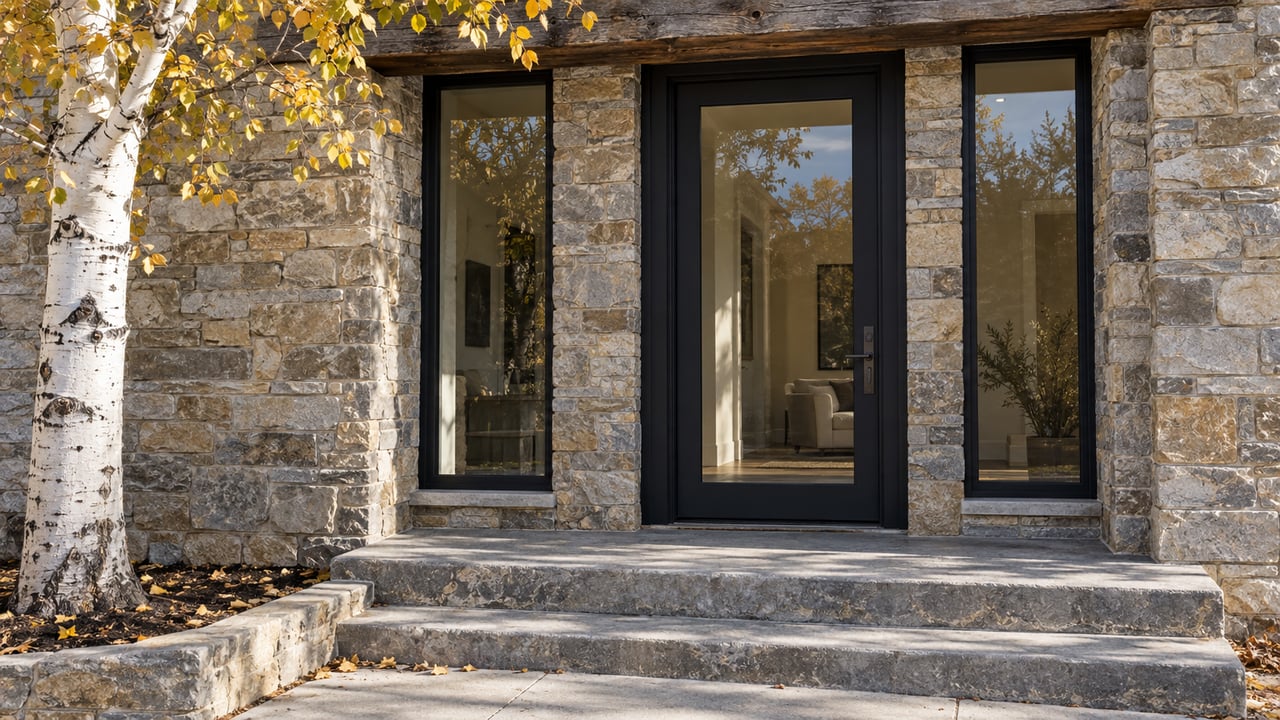
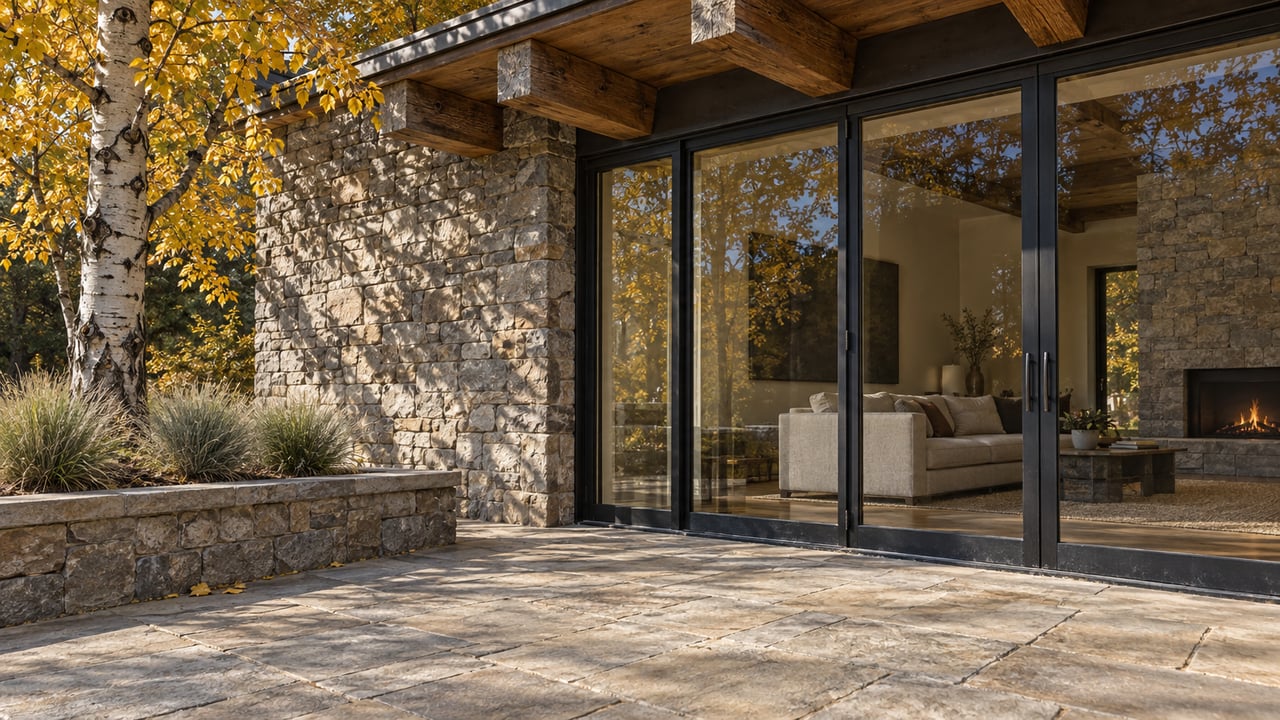
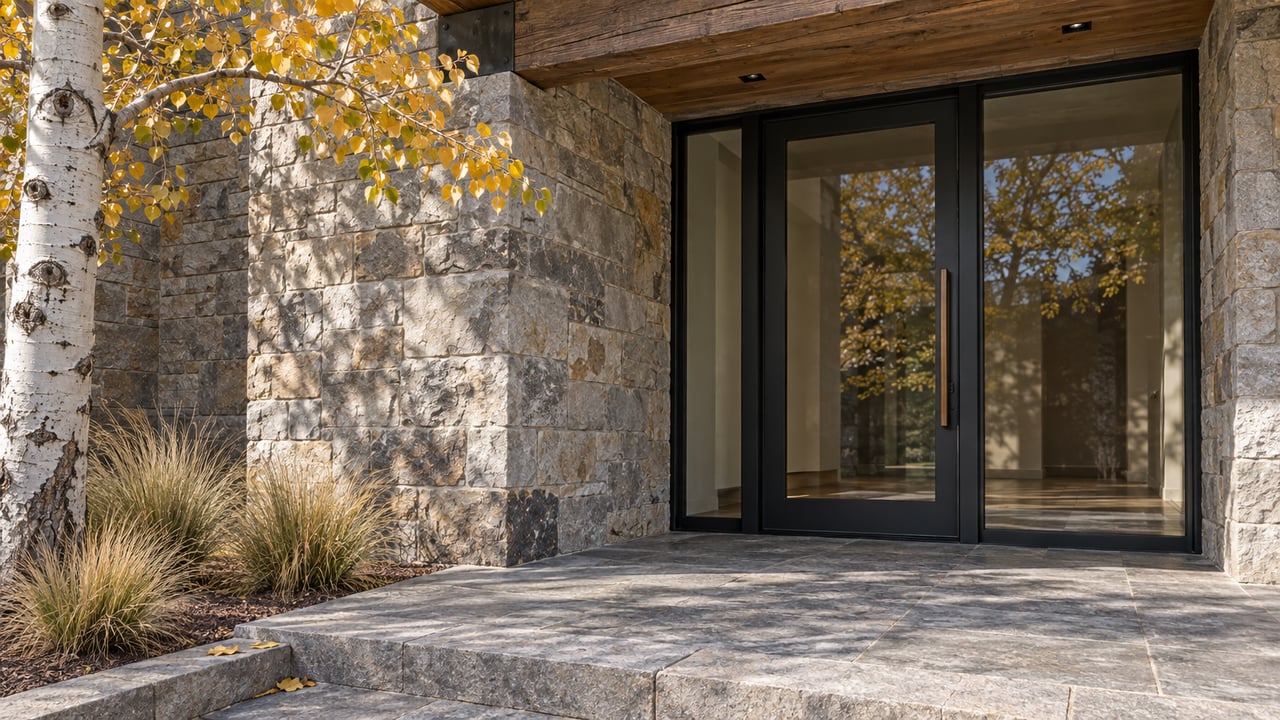
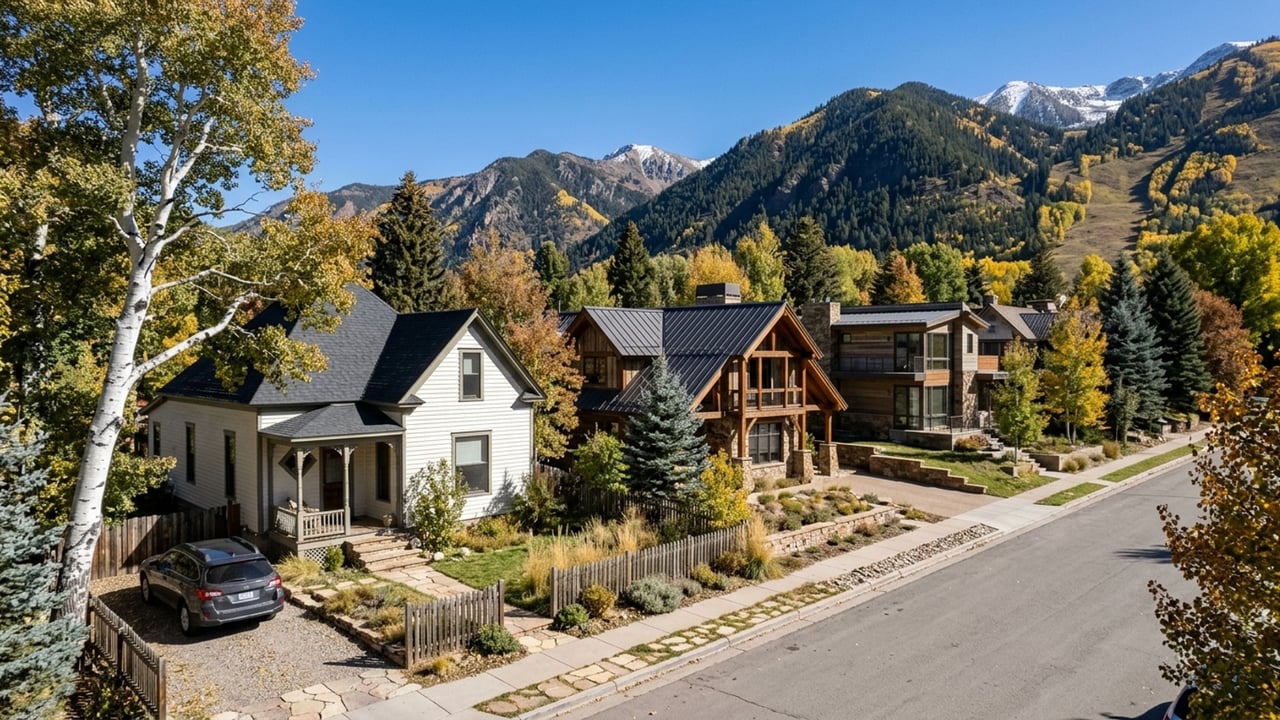
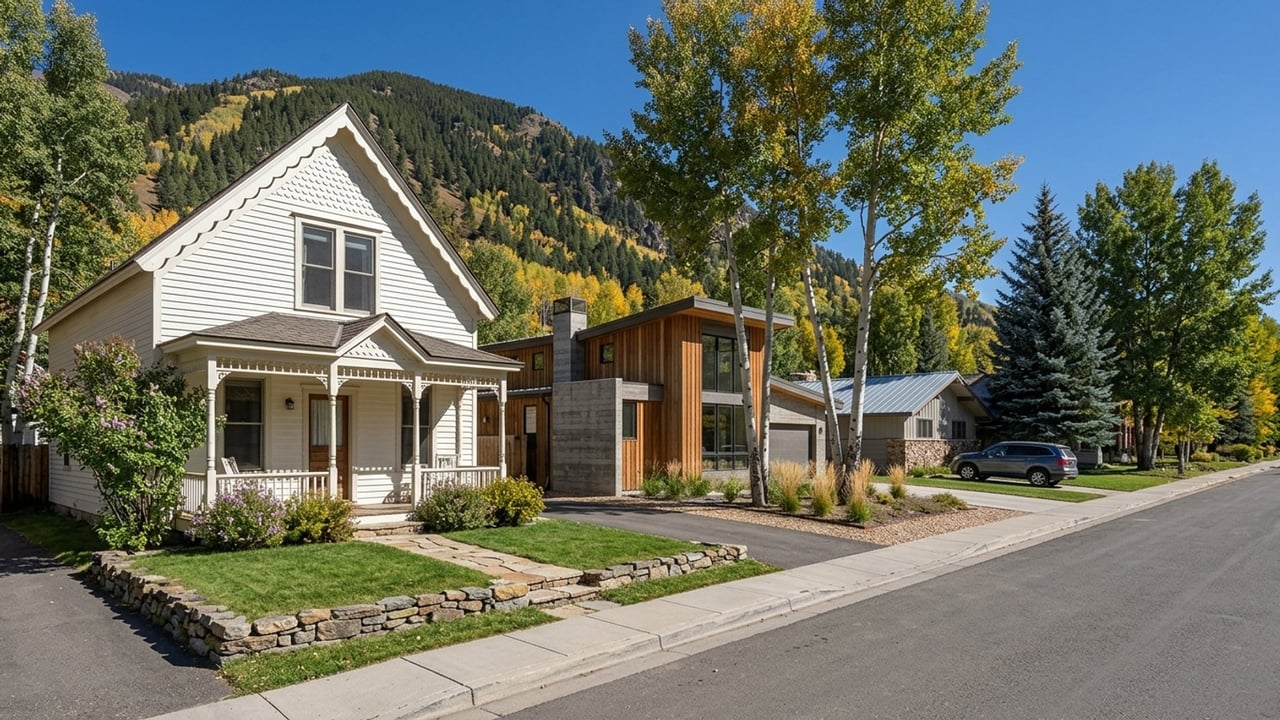
The downtown core near the ski lifts is where you'll find denser development - condominiums, townhomes, properties stacked close together. Move away from the center and the layout opens up into more spread-out mountain lots with larger single-family footprints.
The occupancy breakdown tells its own story about how people use these homes. According to recent 5-year estimates, about 38.1% of units are owner-occupied and 28.7% are rented. The remaining 33.3% sit vacant for much of the year, held as vacation properties. One in three homes essentially dark for large stretches - that's not incidental to how this market works, it's central to it.
Regional Size: Pitkin County and the Roaring Fork Valley
Aspen is the county seat of Pitkin County, which had a population of 16,625 according to 2025 estimates. At the county level, population density drops sharply - just 17.9 people per square mile across the larger geography.
The broader Roaring Fork Valley puts things in a wider frame. That regional corridor includes Snowmass Village, Basalt, Carbondale, and Glenwood Springs, and its population was estimated at around 32,179 in 2010, growing to roughly 40,000 by 2022.
That regional growth is directly connected to what's happening inside Aspen's city limits. The ongoing shortage of affordable housing keeps pushing workers and local buyers farther downvalley into neighboring towns and toward the Colorado River Valley.
Frequently Asked Questions
Is the population of Aspen growing?
No - the permanent population has recently declined. After growing 5.2% between 2010 and 2020, Census estimates show a 7.1% drop from 2020 to July 2025, bringing the latest estimated total to 6,489 residents.
What is the population density of Aspen?
Roughly 1,749 to 1,815 people per square mile. The city fits its year-round residents and vacation properties into just under 3.9 square miles.
How large is Aspen compared to Pitkin County?
Aspen accounts for a large share of Pitkin County's population, but the county is much larger geographically. Aspen has about 6,489 residents; the entire county holds an estimated 16,625.
How many people currently live in Aspen, CO year-round?
Based on the latest available U.S. Census Bureau data from July 2025, there are 6,489 permanent residents. The American Community Survey's 5-year estimate puts that figure slightly higher, at 6,756.
How does Aspen's population fluctuate between the off-season and peak winter months?
It swells considerably. With 33.3% of the town's 6,152 housing units classified as vacant or seasonal, thousands of part-time residents and visitors arrive when the ski lifts open.
Do most Aspen workers live in town or commute from the broader Roaring Fork Valley?
Many commute from outside the city limits. High housing costs and a shortage of affordable units have pushed a large portion of the workforce downvalley toward towns in the Colorado River Valley.
How has recent population growth affected Aspen real estate prices and housing availability?
The permanent population has edged down, but real estate demand has stayed high because of outside buyers and investors. That keeps inventory tight - roughly 153 homes recently on the market - with a median sale price around $1.73 million.