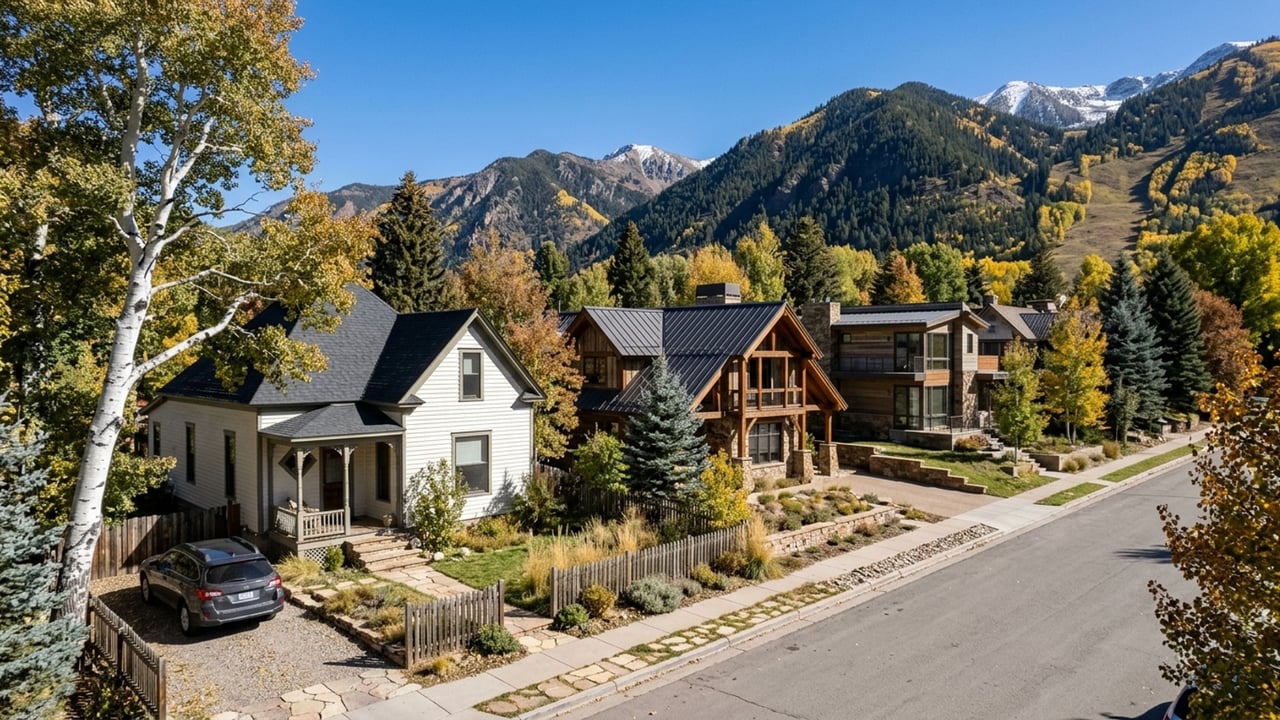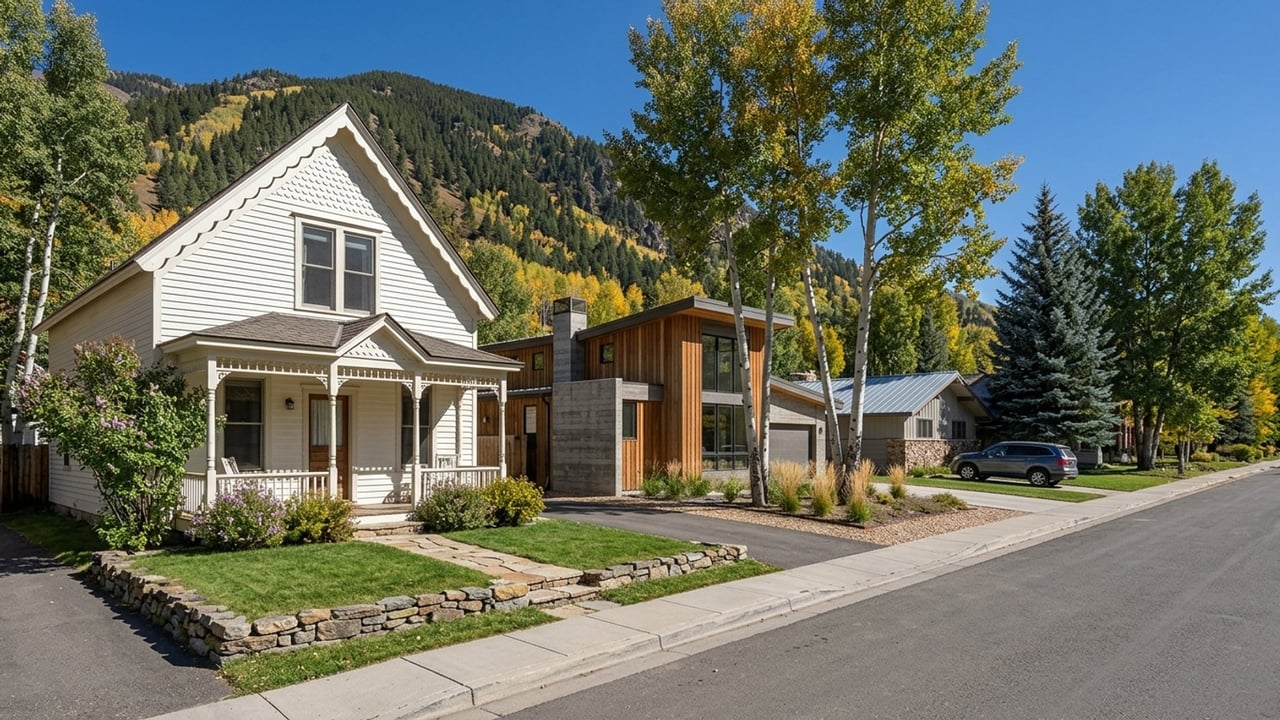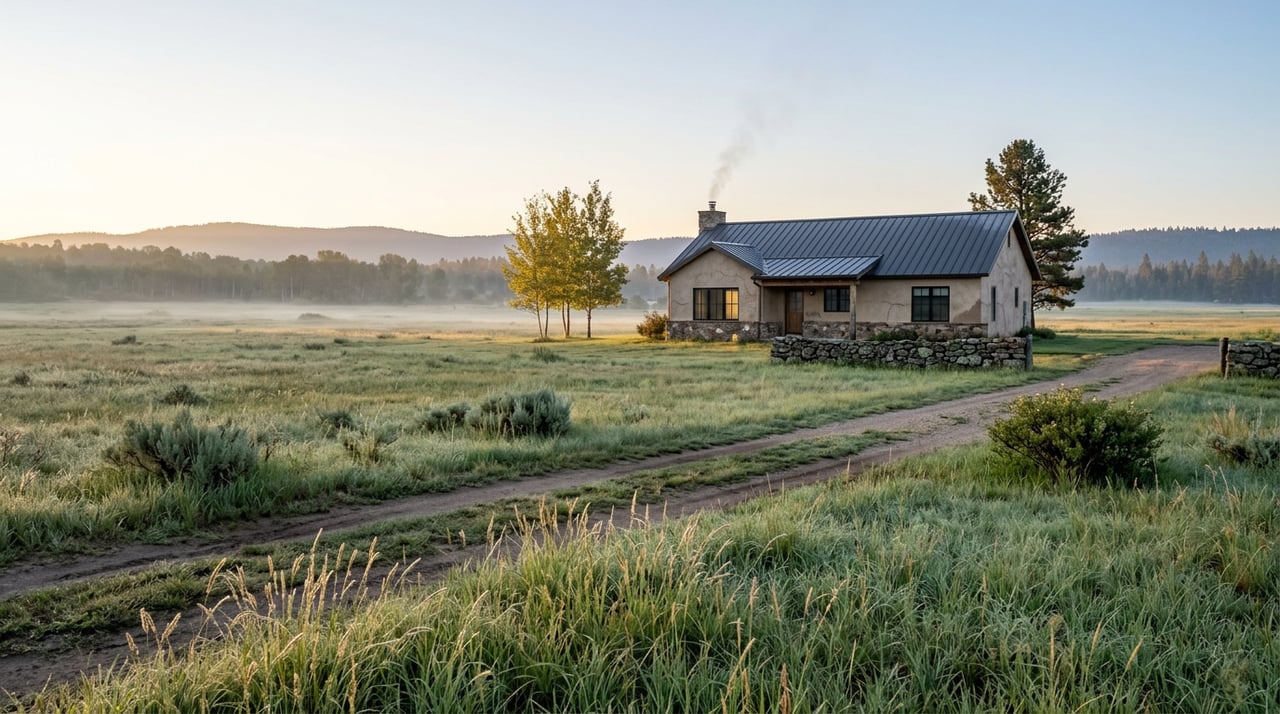
"Terrific views of the Roaring Fork Valley, Mt. Sopris, and the Elk Mountain Range." That is how the application described a 41.3-acre property off Harmony Lane in Missouri Heights, the same bench above Carbondale where ranch homes sit on parcels running from one acre to well past thirty. The application wasn't asking Garfield County for permission to build a bigger house or add an outbuilding. It was asking to cut the land into two lots of exactly 36.2 acres and 5.1 acres.
Anyone who has shopped this bench has noticed the acreage numbers on listings rarely round the way you'd expect. A seller rarely offers a clean 20 and 21. More often it's something like 36.2 and 5.1, or 35.4 and something smaller. That is not a coincidence of surveying. It is the water line running through the paperwork, and it is the single fact that matters more than square footage, view corridors, or even price per acre when you are comparing two properties on this bench.
The Number the County Actually Cares About
Colorado's rule for rural wells draws a line at 35 acres. A parcel at or above that size qualifies for what the state treats as a "presumed non-injury" well permit, meaning the state assumes a household well on that much land won't measurably harm senior water rights nearby. Below 35 acres, a well still gets permitted in most cases, but usually under tighter terms, often restricted to indoor household use only, with outdoor irrigation or livestock water requiring a separate augmentation arrangement. The Colorado Division of Water Resources administers this distinction, and it is the reason the Fussner Minor Subdivision on Harmony Lane landed at 36.2 and 5.1 rather than an even split down the middle. One lot clears the threshold on its own. The other does not, and needs a different water plan to function.
Garfield County approved the subdivision after neighbors raised the same concerns that surface on nearly every Missouri Heights land use case: water resources, wildfire risk, and the load a private road like Harmony Lane can carry. Commissioners upheld the approval on a split vote, and the Post Independent's coverage of the hearing captured the same water anxiety that has followed development proposals on this bench for two decades. The acreage split wasn't cosmetic. It was the applicant working within the exact rule that determines whether a future homeowner gets an unrestricted well or a household-only one.
What the Threshold Actually Buys You
| Parcel path | Typical permit outcome | What it usually covers |
|---|---|---|
| 35 acres or more, standalone | Domestic and livestock well, presumed non-injury | House, garden, stock water, generally without an augmentation requirement |
| Under 35 acres, standalone | Exempt well, often household use only | Indoor use only in many cases, with outdoor use requiring a separate augmentation plan |
This is the general shape of the rule, and every parcel still needs its own permit history checked against the Division of Water Resources records before anyone assumes what it allows. A five-acre lot and a six-acre lot half a mile apart can carry completely different water rights depending on when the well was drilled, what decree covers it, and whether the owner ever joined an augmentation plan. The acreage on the listing sheet tells you almost nothing on its own.
Two Ways Missouri Heights Solved the Same Problem
The bench already has working examples of both paths, and they look nothing alike from the inside.
Panorama Ranches, one of the older subdivisions on Missouri Heights, put its lots on a shared well system from the start. The Panorama Ranches water system manual lays out the mechanics in detail: three wells with a combined annual appropriation capped at 48 acre-feet, an original decree limited to in-house domestic use and fire protection with outdoor irrigation prohibited, and a later amendment that allowed limited outside irrigation only after the association acquired shares in the Missouri Heights Irrigation Company, with each share representing roughly 0.65 acre-feet of water in storage. Homeowners there also carry a separate allotment contract with a regional water conservancy district for additional domestic acre-feet, a contract the manual notes must remain in effect permanently. Buying into Panorama Ranches means buying into that structure. Your water security depends on the association staying current with its shares and its contract, not on the acreage of your individual lot.
Contrast that with a neighboring development like King's Row, described in past county development proposals as running lots of two acres and larger, where wells are typically permitted individually rather than through a shared system. That model puts the burden on each owner to secure and maintain their own permit, with less collective buffer if the aquifer underperforms in a dry year.
Neither model is better on its face. They are different bets. One trades individual control for the discipline of a homeowners association staying on top of shared infrastructure. The other trades collective backup for direct ownership of your own well's fate.
The Fight That Already Happened Once
This isn't a new anxiety on this bench. As The Aspen Times reported, in 2005 a proposed 565-acre subdivision on Missouri Heights drew organized opposition from a group calling itself the Missouri Heights Well Users Alliance, whose members argued the project's water math didn't add up and that the land's carrying capacity would be exceeded regardless of what the developers promised. One neighbor recalled cattle escaping fenced ranchland during a past drought and wandering into residential areas looking for water, a detail that made the abstract argument about aquifer stress feel immediate. The developers' own comments in that coverage acknowledged that reducing lot density to ten acres apiece would break the project's economics, which is another way of saying the math only worked by staying below the acreage line that triggers the easier permit path.
The point isn't that history repeats exactly. It's that Missouri Heights buyers have been asking this same question for twenty years, and the answer has never been simple enough to fit on a listing sheet.
What to Ask Before You Write an Offer
A median price or a lot size on a listing won't tell you which side of the water line you're on. Before you get attached to a property here, ask for:
- The well permit number and its category, whether household use only, domestic and livestock, or shared system
- Whether the property belongs to a homeowners association with its own water rights, and if so, the association's most recent water report or annual meeting minutes
- Any augmentation plan the property participates in, and the acre-feet allocation attached to it
- Whether shares in an irrigation company or a conservancy district contract transfer with the deed or require separate assignment
None of these questions show up in a standard property search. They show up in well permit files, HOA governing documents, and sometimes decades-old water court records. That is exactly the kind of due diligence that separates a property that performs the way you expect from one that surprises you the first dry August.
A Few Questions Worth Asking Directly
Does a bigger lot always mean better water rights? Not automatically. Size matters mainly because it determines which permit category applies, but a smaller lot inside a well-managed shared system can be more secure than a large standalone parcel with a thin, unaugmented well.
Should I confirm whether HOA water shares transfer when a home sells? Yes; confirm this in writing for every specific property rather than assuming from how similar associations operate.
Is a household-use-only well permit a dealbreaker? It depends entirely on how you intend to use the property. It becomes a real constraint the moment you want a garden, an orchard, or animals, at which point an augmentation plan becomes part of the conversation rather than an afterthought.
Missouri Heights rewards buyers who look past the acreage number and into the paperwork behind it. If you're comparing land or a ranch home on this bench and want help reading a well permit or an HOA water report before you get emotionally attached to a view, Jordie Karlinski can walk through the specifics with you. Let's Connect.
This article is general information, not legal, tax or financial advice. Consult a qualified professional about your situation.