When you sell luxury property in Aspen, pricing is not about picking a big number and hoping the market agrees. Even in one of the country’s most expensive resort markets, buyers still compare options carefully, study value closely, and react fast to overpricing. If you want to protect momentum and attract the right level of interest, you need a strategy built on local nuance, not headlines alone. Let’s dive in.
Aspen pricing starts with market context
Aspen sits in a rare segment of the national luxury market. In March 2026, Realtor.com reported that the Rifle micropolitan area, which includes Pitkin County and Aspen, had the highest 99th-percentile luxury threshold in the country at $59.2 million. That confirms what many sellers already sense: Aspen operates in a premium, lifestyle-driven, supply-constrained environment.
Still, that does not mean every Aspen property belongs in the same pricing conversation. The Aspen Board of REALTORS’ March 2026 report shows a rolling 12-month median sale price of $12.75 million for single-family homes and $4.075 million for condos and townhomes. It also shows average days on market of 217 for single-family homes and 185 for condos and townhomes, with 91.0% and 94.7% of list price received, respectively.
Those numbers matter because they tell a more grounded story. Buyers may be shopping in a luxury market, but they are not ignoring value. Long marketing times and less-than-full list-price performance suggest that pricing discipline still plays a major role in the final outcome.
Why citywide averages can mislead sellers
One of the biggest pricing mistakes in Aspen is relying on one broad market statistic. In March 2026, Realtor.com listed Aspen’s median listing price at $3.20 million, with 435 homes for sale, a 130-day median days on market, and a 94% sale-to-list ratio. Realtor.com also categorized Aspen as a buyer’s market.
That may seem out of step with the higher local sales medians, but the difference comes from what each dataset measures. Listing-based data shows what sellers are asking and how active inventory is behaving. Sales-based data shows what closed and where buyers actually landed.
For your home, both views matter. The listing picture helps you understand current competition, while closed sales help define proven value. A strong pricing strategy uses both instead of leaning on whichever number feels more flattering.
Micro-neighborhoods shape true value
In Aspen, pricing starts getting real when you zoom in. Spring 2026 neighborhood data from Realtor.com shows major variation in median listing prices. The West End was at $15.625 million, the East End at $14.45 million, Red Mountain at $25.75 million, and Downtown Aspen at $1.725 million.
Inventory and days on market vary too. The West End had 27 homes for sale and 117 median days on market, while the East End had 20 homes and 98 days on market. Red Mountain had just 8 homes for sale, which shows how quickly scarcity can change the pricing conversation.
ZIP code differences also reinforce this point. Realtor.com reported a median listing price of $2.45 million in 81611 and $16.8 million in 81612. If your pricing strategy ignores these micro-market splits, you risk comparing your property to homes that live in a totally different demand lane.
Sold data adds another layer
Redfin’s March 2026 sold data showed median sold prices of $2.4 million in Downtown Aspen, $9.35 million in the West End, $20.5 million in the East End, and $30.2 million in Red Mountain. That spread is wide, and it highlights why broad Aspen averages can blur more than they clarify.
It is also important to read small sample data carefully. In that same month, the East End and Red Mountain each had just one sale in the reported sample. That means the data is useful as direction, but not enough on its own to set your asking price.
The right comps are hyperlocal
For luxury sellers, the best comparable properties are not simply the closest or newest sales. In Aspen, strong comps should reflect the same micro-neighborhood, similar view exposure, comparable design quality, and a realistic match in renovation or redevelopment potential.
That matters because two homes can share a similar square footage and still attract very different buyers. A renovated contemporary home with polished finishes, strong privacy, and a premium view corridor should not be priced like a dated property with more limited orientation. The same goes in reverse.
Your comp set should also include active competition in your immediate segment. If buyers can choose between your property and several others in the same price band, your list price has to make sense on day one. In a market with meaningful inventory and longer selling timelines, the launch price often shapes the entire negotiation path.
Views are valuable, but not interchangeable
In Aspen, sellers often know their views matter. The harder part is understanding how much they matter and to whom. Research cited in the report shows that scenic views can contribute meaningfully to value, but the premium varies based on market, view type, and surrounding context.
That is the key takeaway for Aspen. A view is not a generic checkbox. Wide mountain panoramas, protected sightlines, sunset orientation, or a specific visual corridor may command stronger interest than a more limited or partially obstructed setting.
When pricing your home, the question is not just whether it has a view. The question is how that view compares with the view quality offered by direct competitors and recent sales. In a luxury market, subtle differences often carry real pricing consequences.
Design quality affects pricing power
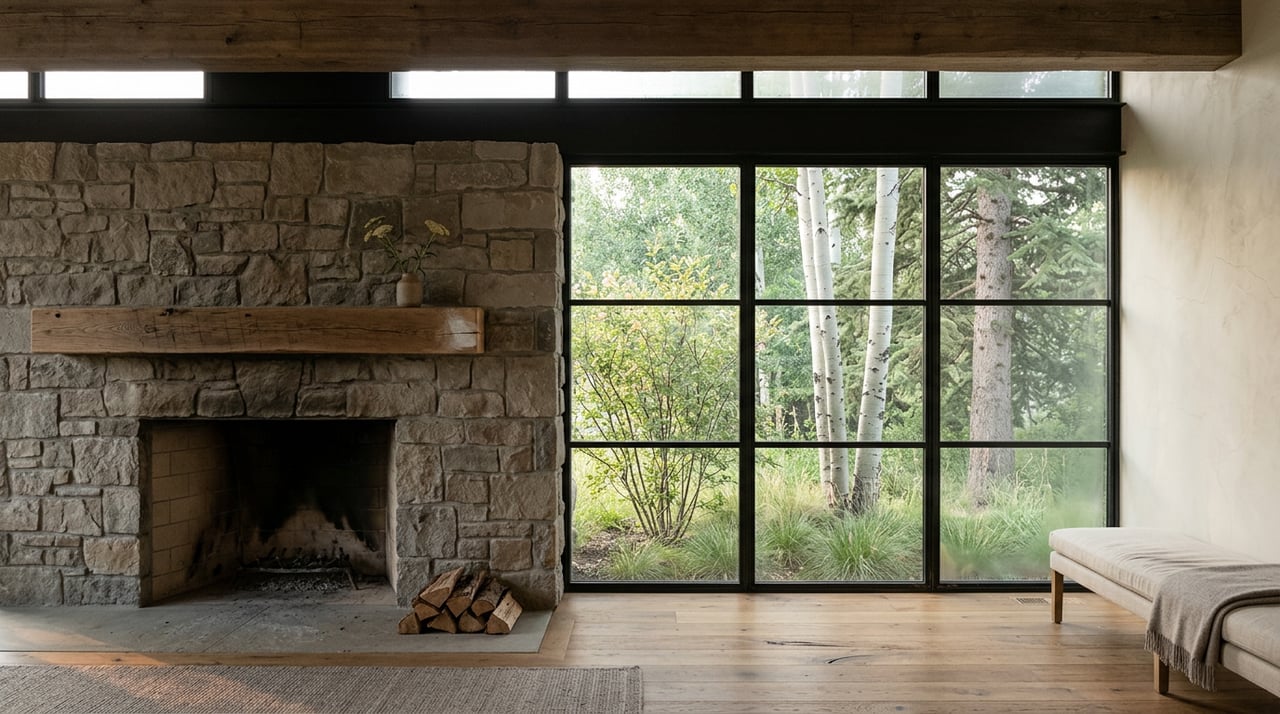
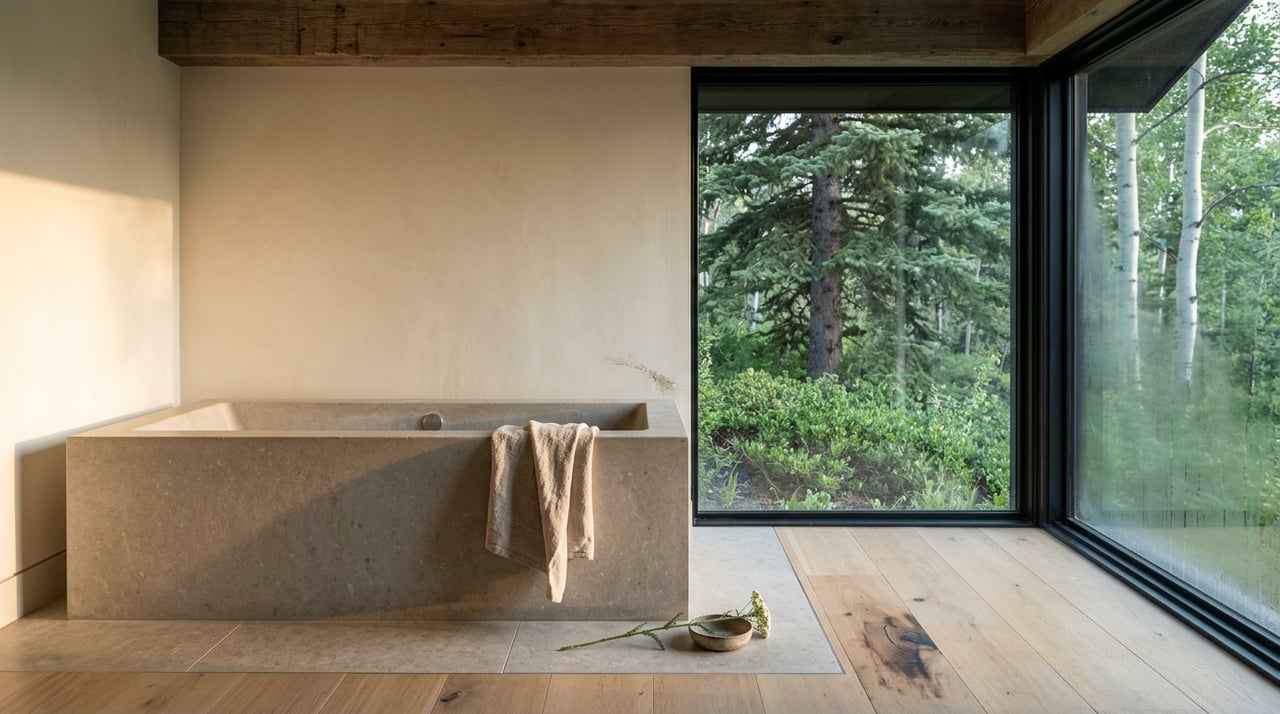
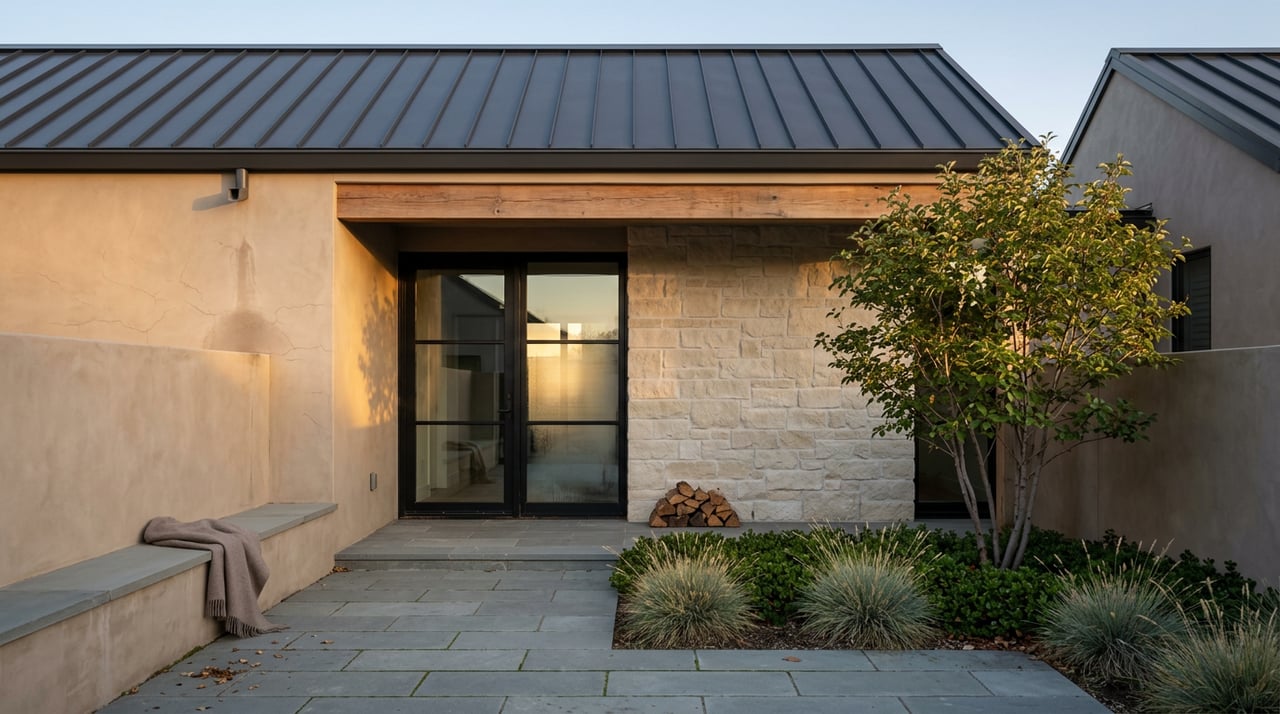
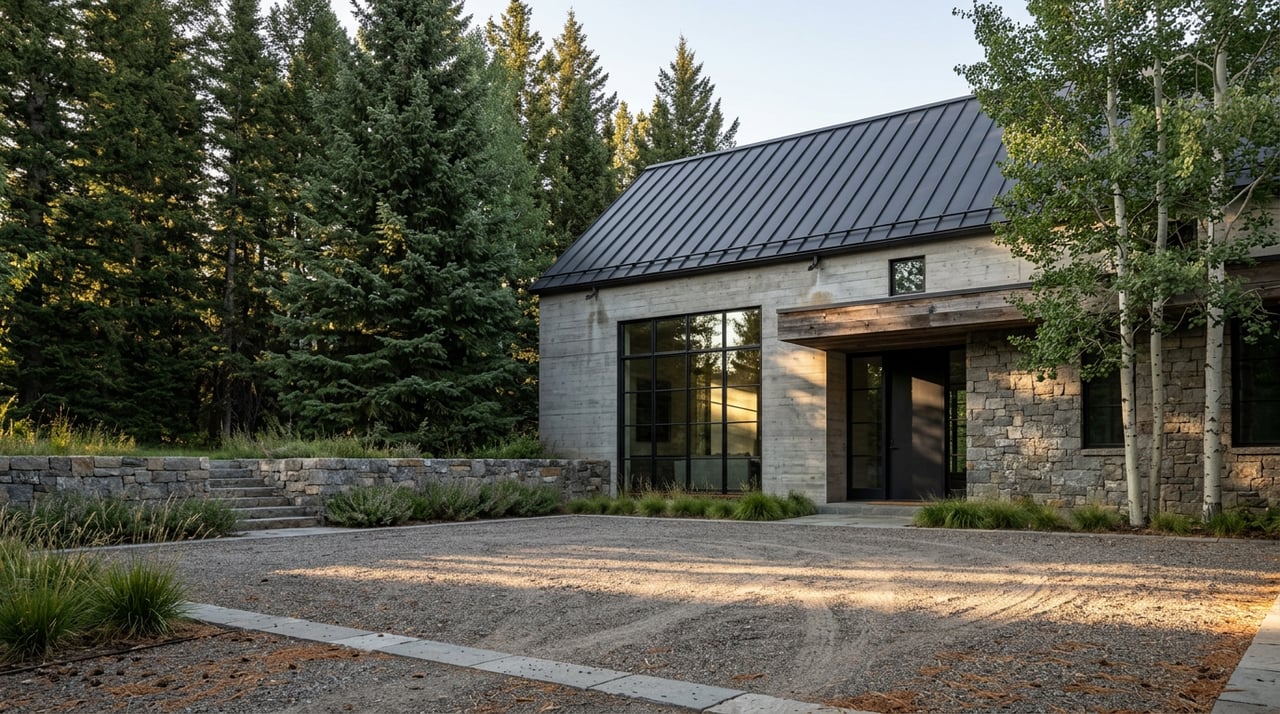
Luxury buyers in Aspen are not only buying location. They are also buying design, finish level, architectural integrity, and how well a home fits its setting. This is especially important in a market where properties range from historic residences to mountain-modern homes to redevelopment opportunities.
The City of Aspen’s Historic Preservation Design Guidelines note that the original townsite follows a grid pattern, while later subdivisions are more curvilinear with irregular lots. The guidelines also state that projects are expected to respect the historic development pattern of the block, neighborhood, or district. That means architecture and context are not just aesthetic issues. They can affect future flexibility and buyer expectations.
If a property is individually designated or located in a historic district, the city’s Historic Preservation FAQ states that exterior work generally needs review before it begins. For pricing, that can influence how buyers think about updates, timelines, and future plans. A beautifully preserved home may command a premium for character and location, but some buyers may weigh design review limits into what they are willing to pay.
Not every property has the same upside
This is where sellers need to be especially careful. A remodeled home, a historic home, and a teardown candidate may sit near each other, but they do not offer the same path forward for the next owner. If you price them as though they do, you can miss the market.
Aspen also formally adopted the Colorado Wildfire Resiliency Code on March 25, 2026, with an effective date of April 23, 2026 for building permits submitted after that date. The city’s Wildfire Prevention page notes that historically designated buildings and historic districts may be exempt from some wildfire requirements when compliance would damage historic features. That adds another layer of property-specific complexity that can shape value, cost expectations, and redevelopment appeal.
Overpricing can cost more than it seems
In a market where average days on market are already elevated, overpricing can quietly work against you. Luxury buyers tend to be informed, patient, and willing to wait for alignment on quality and value. If your home debuts above what the market can support, you may lose the urgency that often helps strong listings perform best.
The challenge is not just time. Once a property sits, buyers may begin to wonder what they are missing, even if the home itself is exceptional. Price reductions later can help, but they do not always restore the same first-launch energy.
A strategic list price aims to protect both perception and leverage. It gives your property room to stand out against current competition while still supporting a strong negotiation position when the right buyer engages.
What a smart Aspen pricing plan should include
A thoughtful luxury pricing strategy in Aspen should answer a few key questions before the home goes live:
- Which recent sold properties are truly comparable, and why
- What active listings are competing for the same buyer
- How neighborhood, view corridor, and design quality affect value
- What days-on-market pattern is realistic for this property type
- Whether historic review, design standards, or wildfire-code issues could affect buyer demand
- How to launch a unique home without pricing past the market
These are not small details. In a fragmented market like Aspen, they are often the difference between a listing that attracts serious attention and one that spends months chasing the market down.
Strategic pricing supports stronger outcomes
The goal is not simply to price high or price low. The goal is to price credibly, competitively, and with a clear understanding of what makes your home different. In Aspen, that usually means balancing macro market data with hyperlocal context and property-specific realities.
That is especially true for luxury and second-home sellers who want to protect privacy, preserve brand-new listing momentum, and reach the right buyer pool early. With the right strategy, pricing becomes a tool for positioning, not just a number on paper.
If you are thinking about selling in Aspen, a local pricing conversation can help you understand where your property truly fits today. For tailored guidance on seller strategy, micro-market positioning, and luxury pricing in Aspen, connect with Jordie Karlinski.
FAQs
What makes luxury home pricing in Aspen different from other markets?
- Aspen pricing is highly segmented by micro-neighborhood, property type, views, design quality, and regulatory factors, so broad citywide averages often do not tell the full story.
Why do Aspen sellers need neighborhood-specific comps?
- Neighborhood medians in Aspen vary sharply, and recent sales in places like Red Mountain, the East End, the West End, and Downtown Aspen can differ by many millions of dollars.
How do views affect Aspen luxury property value?
- Views can add meaningful value, but the premium depends on the type of view, its breadth, orientation, and how it compares with other nearby luxury listings and recent sales.
Do historic rules affect pricing for Aspen homes?
- Yes. If a home is individually designated or located in a historic district, exterior work generally needs review, which can affect future changes and buyer willingness to pay.
Can wildfire code changes influence Aspen property pricing?
- They can, especially when buyers are evaluating remodels, new construction potential, or future building costs tied to permits submitted after the city’s April 23, 2026 effective date.
Is Aspen a seller’s market for luxury property?
- Not uniformly. March 2026 listing data categorized Aspen as a buyer’s market, while closed-sale data still showed premium pricing, which is why property-specific strategy matters so much.